Last updated November 22, 2026
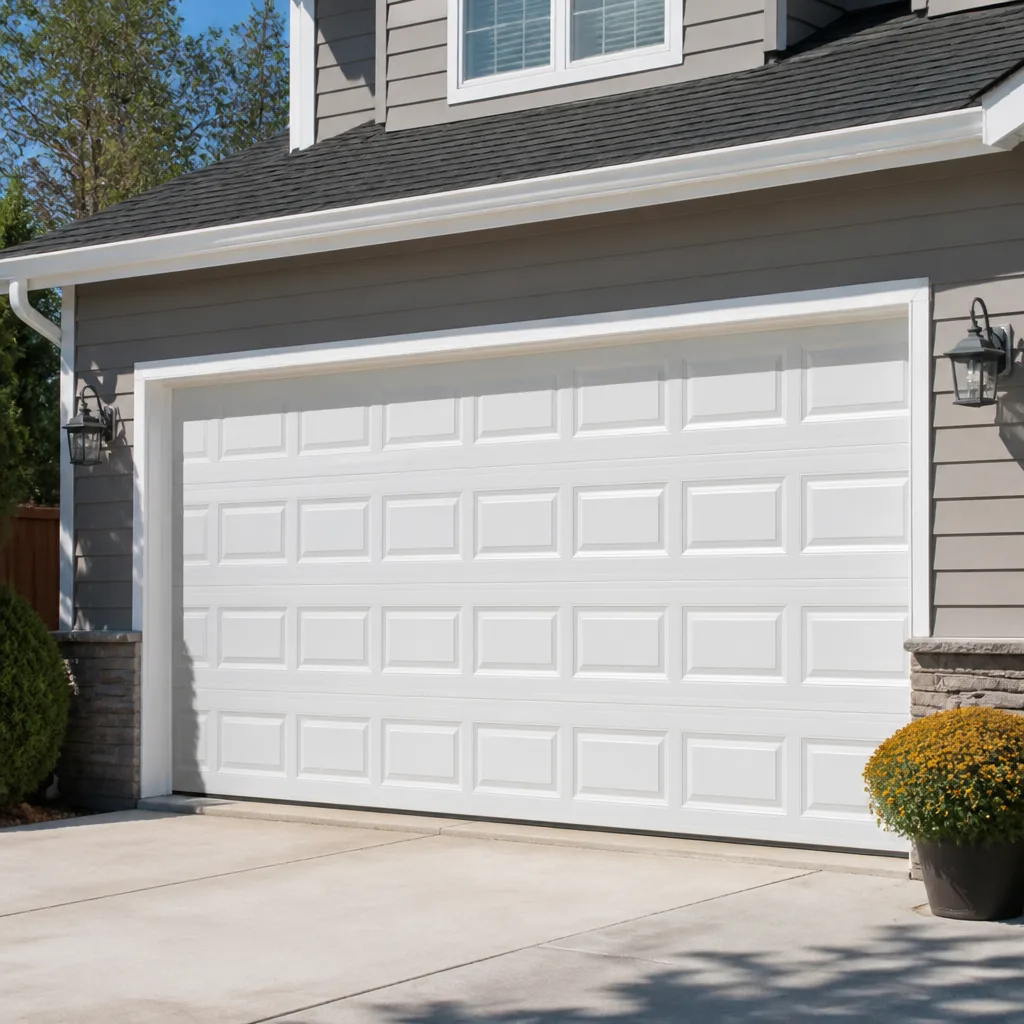 Raised-panel steel
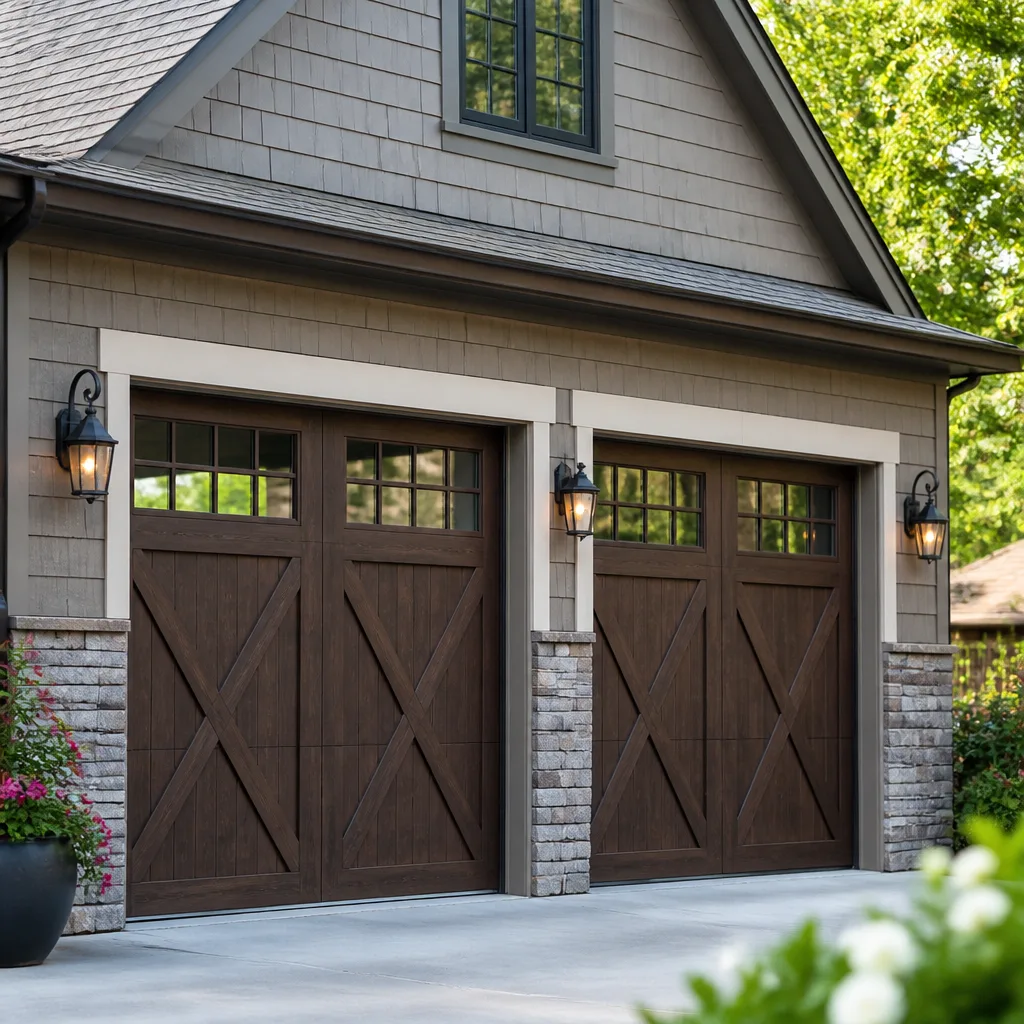 Carriage house
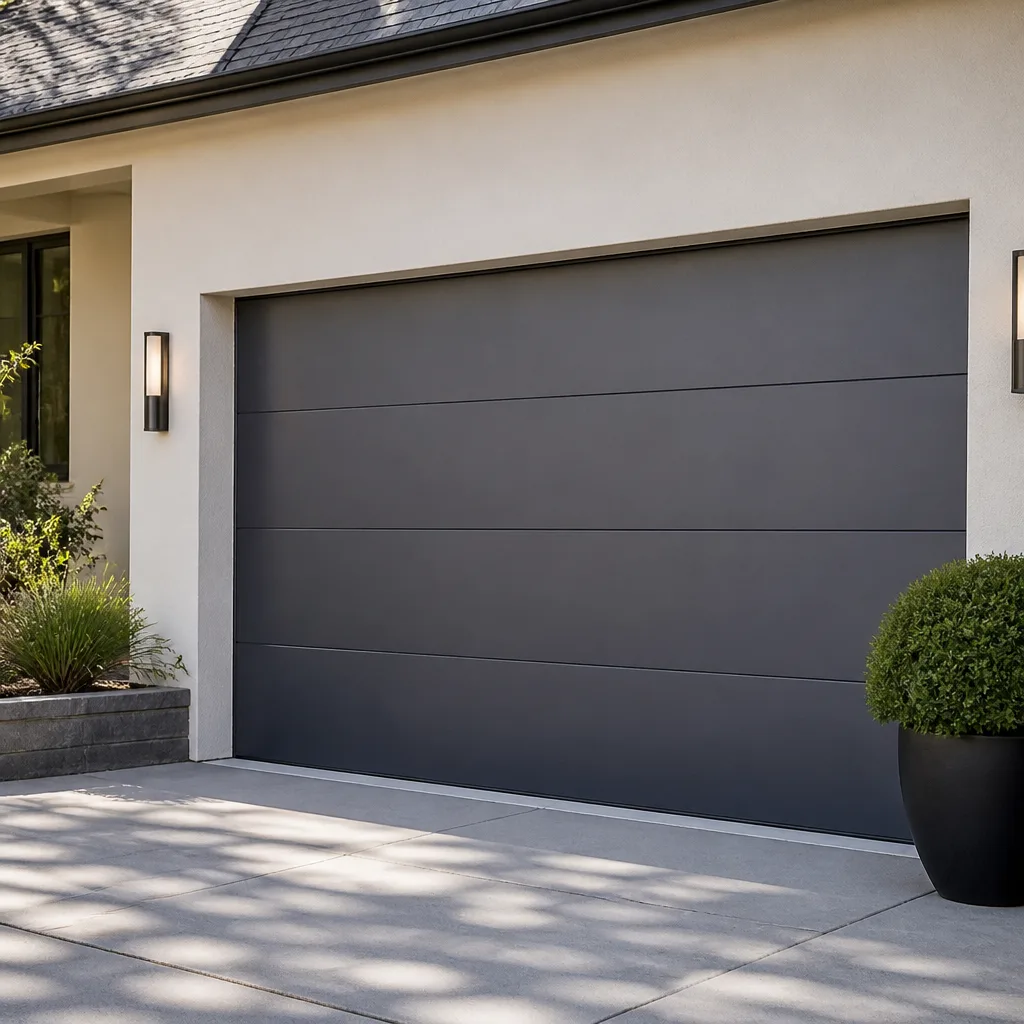 Modern flush
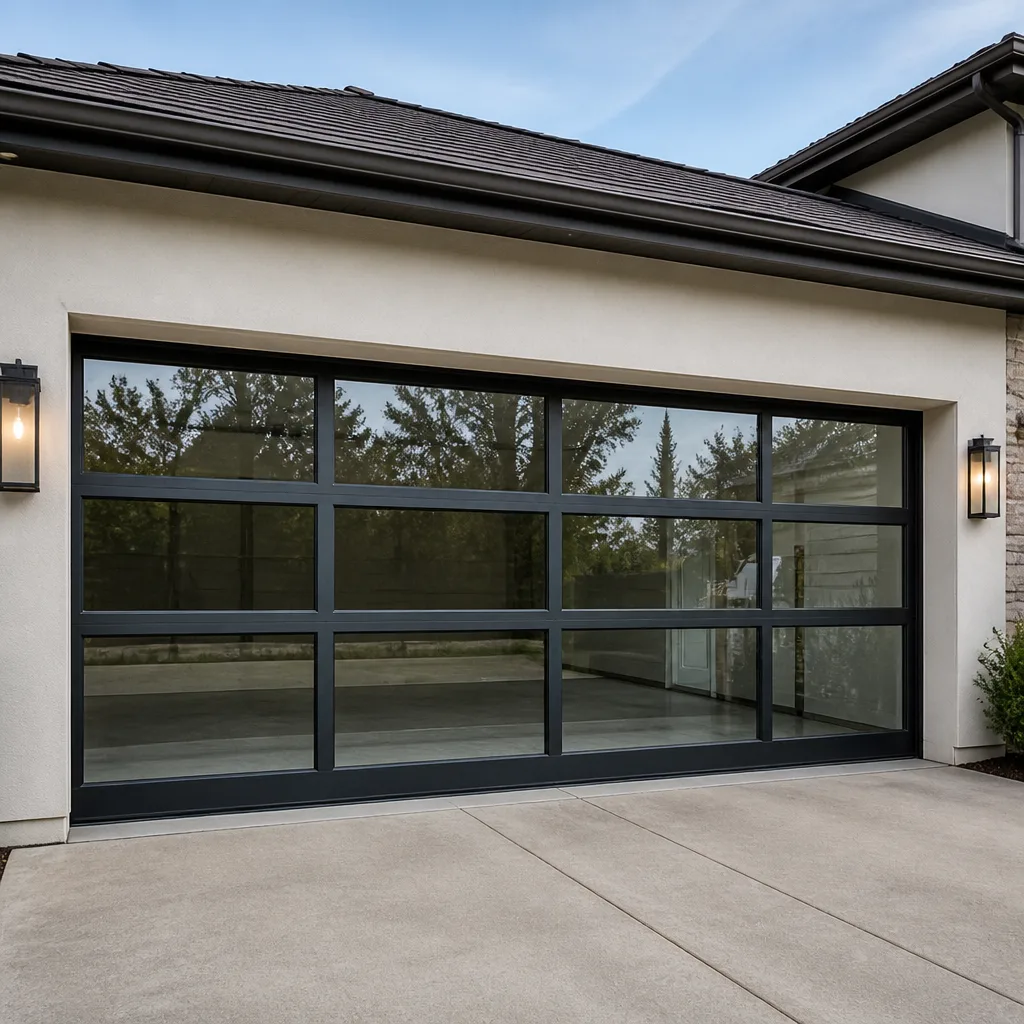 Full-view glass
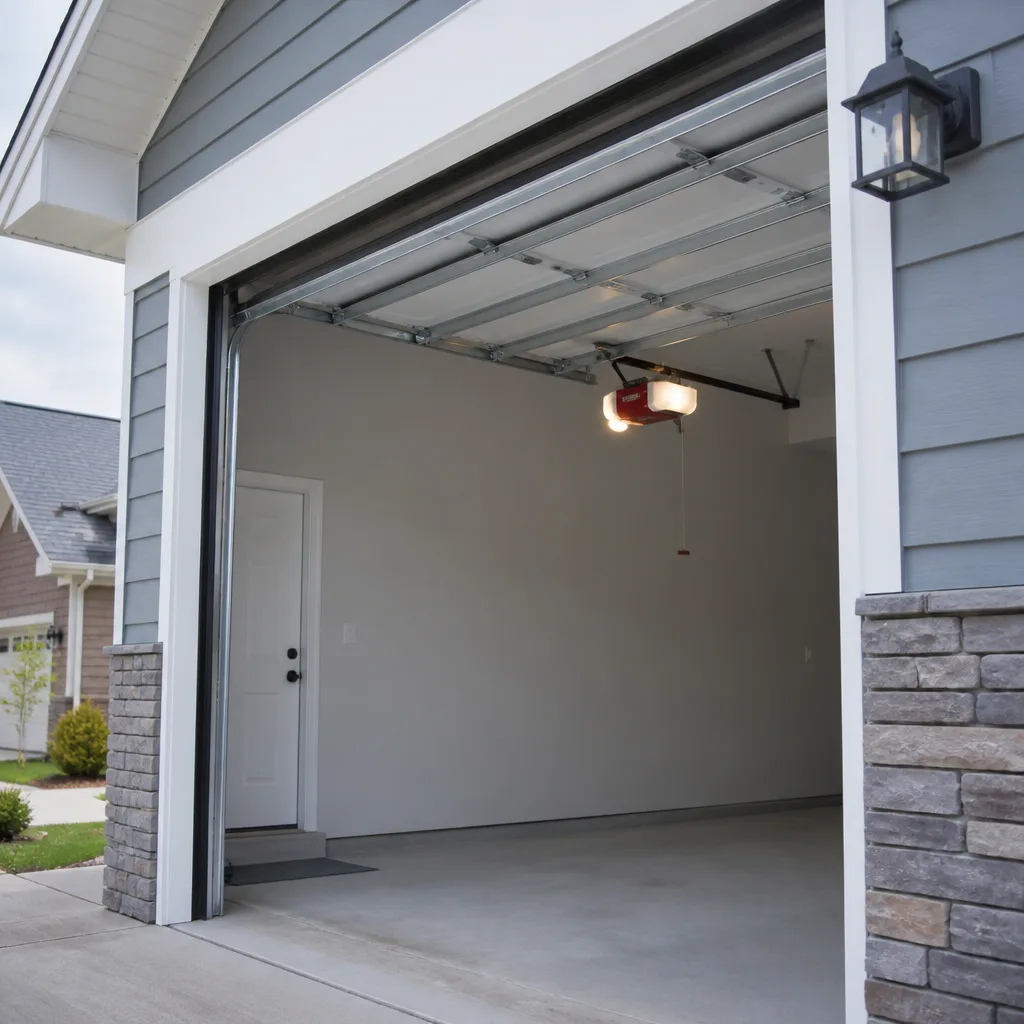 LiftMaster openers
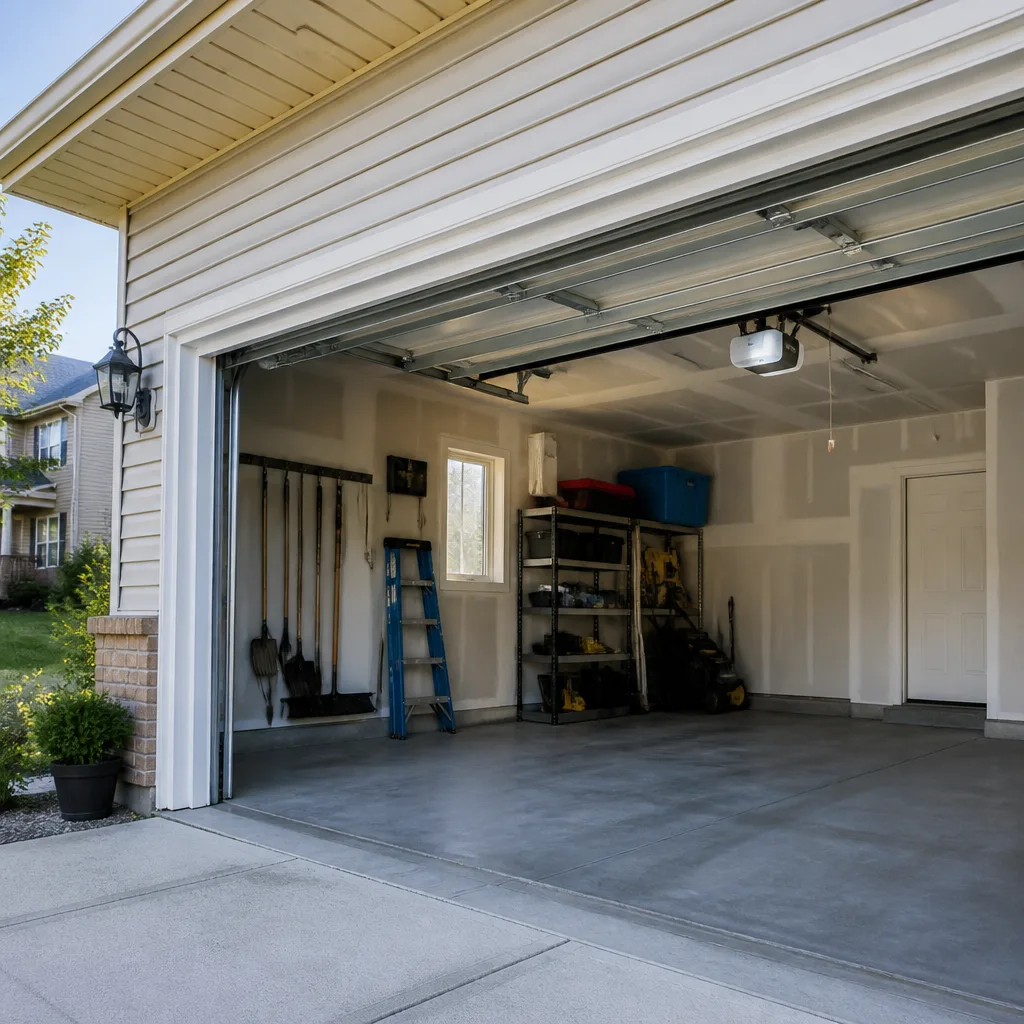 Chamberlain openers
Full 25-point door and opener safety check with every visit - springs, cables, rollers, tracks, and your LiftMaster or Chamberlain opener included
You get a price before we start. It does not change when the pro arrives.
Get your free estimateThe Complete Guide to Garage Doors in Johns Creek
Most garage door guides are written for a hypothetical homeowner in a hypothetical city. They explain torsion springs to nobody in particular and quote national averages that mean nothing once you’re standing in your driveway in Johns Creek. That advice misses the things that actually shape a garage door decision here: covenants that dictate the panel style you can install in Country Club of the South or St. Ives, a humidity-and-heat cycle that ages certain materials faster than the spec sheet suggests, and home values high enough that a tired-looking door quietly costs you at resale. This guide translates the general into the local. You’ll learn which doors fit Johns Creek homes, what repairs typically run, when to repair versus replace, and how to avoid the traps we see most often.
Quick Answer
A garage door in Johns Creek is a long-term exterior asset, not a one-time purchase. Match the door material and style to your community’s architectural guidelines first, then budget for spring and opener maintenance on a realistic schedule given the local heat and humidity. Repair usually makes sense for a single failed component on a door younger than about 15 to 20 years; replace when the panels, hardware, and safety systems are all aging at once. Get a free written estimate and confirm the specification in writing before anyone orders anything.
Styles & brands we work with
- Raised-panel steel
- Carriage house
- Modern flush
- Full-view glass
- LiftMaster openers
- Chamberlain openers
Table of Contents
- How HOA architectural guidelines shape your door choices
- Why Georgia’s humidity and heat cycle wear doors faster
- Standard door configurations in Johns Creek and what they cost
- Repair or replace: how to decide
- Big-box installers versus a dedicated Johns Creek specialist
- Springs and openers: the parts that fail first
- How garage door condition affects resale in Johns Creek
- A year-round maintenance routine that fits the climate
How HOA architectural guidelines shape your door choices
In Johns Creek communities like Country Club of the South and St. Ives, the architectural review process decides more than you might expect. Before a single panel is ordered, the door has to satisfy a covenant that may specify color palettes, panel styles, window treatments, and material types. Getting the specification wrong means approving an expense that then has to be revisited, and the HOA review is not something a contractor can wave through.
The practical approach is to request your community’s architectural guidelines first and hand them to the estimator. A good specialist will note the required finish level, confirm whether the door must match the existing carriage-house or raised-panel profile, and flag anything that needs board approval before the order is placed.
Here’s what the guidelines typically influence:
- Panel profile. Many Johns Creek covenants require a raised-panel or carriage-house look and disallow flat, modern-panel styles.
- Color. Paint or stain colors are often drawn from an approved palette tied to the home’s exterior.
- Windows. Some communities limit window styles or window count on a street-facing door.
- Material. Sectional steel, wood composite, and aluminum doors are all common, but the covenant may point to one.
The cost difference between an HOA-compliant door and one that later has to be replaced is real, so it pays to read the guideline before the quote, not after. If the door style is set by the covenant, the choice becomes about material and insulation within that style rather than starting from scratch.
Why Georgia’s humidity and heat cycle wear doors faster
Manufacturer lifecycle estimates are usually written for moderate climates. Johns Creek’s long, humid summers and warm shoulder seasons put specific stress on garage doors that a spec sheet doesn’t fully capture. Understanding this cycle explains why some doors in the same neighborhood age at very different rates.
The main effects:
- Humidity and steel. Repeated condensation on the inside face of a steel door accelerates rust at the panel seams and bottom edge. Screws, hinges, and bottom brackets are usually the first to show it.
- Heat and wood. Wood and composite doors expand and contract with temperature swings. Seams open, finishes blister, and hinges work loose faster than in a stable climate.
- Grease and opener life. Hot garages thin out lubrication and stress opener components, particularly belts and gear assemblies.
- Spring fatigue. Torsion springs cycle with every open and close. In a busy Johns Creek household, that adds up fast, and the tension in the spring weakens slowly before it fails.
The takeaway is that real maintenance intervals here should be shorter than the generic guidance suggests. Lubricating hinges, rollers, and tracks every few months, and inspecting the bottom seal and spring tension annually, keeps a door running longer in this climate than treating it as a fire-and-forget fixture.
Standard door configurations in Johns Creek and what they cost
Johns Creek home styles cluster around a few recurring garage layouts. Knowing which one you have tells you a lot about how a repair job will go, and where the costs land.
Common configurations here:
- Two-car split door. Two single doors side by side, typically 8 or 9 feet wide each. Each door has its own spring set and opener, so a repair on one doesn’t touch the other.
- Two-car single door. One wide door across a two-car opening. Larger, heavier, and more load on the springs and opener.
- Carriage house. A style popular in communities like Country Club of the South, with decorative hardware and often a window row. The cosmetic details add to the specification but rarely to the repair cost.
- Side-load. Torsion hardware mounted on the side rather than across the header. Less common but favored where ceiling clearance is tight.
For a like-for-like replacement of a standard two-car door, typical installed cost in the Johns Creek market tends to fall in the wide range you’d expect for a sectional steel door, with carriage-house styling and insulated options moving toward the upper end. A single failed component, such as one spring or one opener, is usually repaired for a fraction of that. Because HOA specifications and home size vary so much, the written estimate is what sets the final number, and it’s worth getting in hand before committing.
Repair or replace: how to decide
The repair-versus-replace question is the one homeowners most often get wrong, usually in one of two directions: replacing a solid door because of one broken part, or patching a door that’s structurally finished. The following sequence is the one we walk through on an estimate.
- Identify what’s actually failing. A single spring, a single opener, or a single hinge is a repair. Simultaneous failure across panels, hardware, and the opener is a replacement signal.
- Check the panels. Dents, cracks, and rust-through at the seams mean the door skin is compromised. A repair can hide a dent, but it can’t restore a failing panel.
- Measure the door’s age against its components. A door at the far end of its expected service life is a candidate for replacement even when the current fault looks minor.
- Confirm the safety systems. If the safety sensors, reverse mechanism, and bottom seal are all past their usable life, the total of the repairs starts to approach replacement cost.
- Compare the written estimates. Repair cost versus replacement cost, side by side, makes the decision obvious in most cases.
For a two-car split, one door can be repaired or replaced without touching the other, which spreads the cost over time. A single wide door has to be handled as one unit. That structural difference alone often decides the question in Johns Creek homes with split-door layouts.
Big-box installers versus a dedicated Johns Creek specialist
Big-box retailers handle garage doors as a product sale. They’ll order a door, arrange a subcontractor for the install, and hand you the manufacturer’s warranty. That can work when the specification is simple and nothing goes wrong. The gap shows up in three places that matter for Johns Creek homeowners.
First, sourcing the right spec. A store stocks what it stocks. A dedicated specialist can source Amarr, Wayne Dalton, Craftsman, and Raynor lines and match the panel profile, color, and insulation to your covenant and home. Second, post-install service. When an opener fails two years after a big-box install, you’re back on the phone with a call center, not a specialist who knows your door. Third, the repair work itself. Springs, torsion hardware, and opener repairs are specialist work that a retail installer often doesn’t do at all.
If you want the full picture on the service side, garage door repair covers how a specialist approaches diagnosis and repair, including the spring work a big-box subcontractor may decline. A specialist who handles every brand in your community’s inventory also diagnoses faster and sources the right part the first time, which is the difference between a single visit and three.
Springs and openers: the parts that fail first
If there’s one part of a garage door system that deserves its own section, it’s the spring. Torsion and extension springs carry the door’s weight, and when one fails, the door becomes heavy, dangerous, and often unusable. The spring also accounts for the majority of emergency calls we field in Johns Creek.
A word of caution first. Springs are under extreme tension. Adjusting, removing, or replacing one without the right tools and training can cause serious injury. This isn’t a DIY job, and any guide that walks you through winding a torsion spring yourself is doing you a disservice. Leave it to a trained technician.
What you should know as a homeowner:
- Signs of a failing spring. The door feels heavy, opens unevenly, or won’t stay up. A visible gap in a torsion spring or a stretched extension spring is a clear signal.
- Pair replacement. Springs are usually matched, and both tend to fail close together. Replacing one at a time often means a second call soon after.
- Opener stress. A failing spring makes the opener work harder, which accelerates wear on the belt, gear, and motor. Fixing the spring early protects the opener.
Opener repairs are the second-most-common failure. LiftMaster, Chamberlain, Genie, and Craftsman units cover most Johns Creek homes, and a specialist familiar with those models can usually diagnose a dead unit in a single visit. For a deeper look, garage door opener repair walks through the common faults and what a repair typically involves.
How garage door condition affects resale in Johns Creek
In Fulton County’s upper-tier market, the garage door is one of the most visible elements of a home’s street presentation. Buyers see it from the driveway before they see the front door, and its condition influences how they read the whole property.
What this means in practice:
- A tired-looking door reads as deferred maintenance. Rust, dents, and a faded finish signal that other upkeep may have slipped.
- A clean, well-maintained door reads as a cared-for home. Fresh paint, working openers, and quiet operation suggest the owner has kept up with the details.
- In communities with strict architectural guidelines, a non-compliant door is a red flag. Buyers and their agents notice when a door doesn’t match the covenant specification.
You don’t need to replace a door to improve its resale presentation. A service call that lubricates the hardware, adjusts the springs, and confirms the opener is safe often makes the door look and sound better than it has in years. When replacement is called for, spending on a door that fits the community’s design language is a decision that reads well at listing time, even though we can’t put a number on it. For a wider view of the options, garage door installation covers how a spec is chosen and what the install involves.
A year-round maintenance routine that fits the climate
The single most effective thing you can do for a garage door in Johns Creek is a short, consistent maintenance routine. None of it is complicated, and it will extend the door’s life until the day a repair is genuinely needed. Here’s the routine.
- Lubricate the moving parts. Hinges, rollers, and the torsion shaft get a garage-door lubricant every few months. In this climate, do it before the summer humidity peaks and again as the cooler months arrive.
- Inspect the bottom seal. A cracked or flattened seal lets water and pests in. Replacing it is inexpensive and keeps the door frame dry during the rainy season.
- Check the balance. Disconnect the opener and lift the door halfway. It should hold. If it drops or feels heavy, the springs need attention.
- Test the safety reverse. Place a small object in the door’s path and confirm the door reverses. This is a safety check first and a maintenance check second.
- Listen for changes. A door that gets louder, squeaks, or moves unevenly is telling you something. Address it before it becomes an emergency.
We work on whatever system you already own, whether it’s an Amarr door with a LiftMaster opener or a Raynor setup with a Genie motor. There’s no reason to replace a sound system because its brand isn’t current. If you’d rather leave the routine to a specialist, a maintenance visit is a simple way to keep the door in shape without touching the tension tools yourself. For a general introduction to the service lineup, Johns Creek Garage Door Repair lays out the full scope.
Common Mistakes to Avoid
- Ordering a door before reading the HOA covenant. In Country Club of the South and St. Ives, the specification is set before you shop. Starting from the catalog means you may have to revisit the choice at your own expense.
- Winding a torsion spring yourself. Springs are under extreme tension and can cause serious injury without the right tools and training. This is a job for a trained technician, not a weekend project.
- Replacing one spring at a time. Matched springs usually fail close together, so replacing one of a pair often means a second service call soon after.
- Assuming an old system is unsupported. If a technician tells you your opener or door is “too old” to service, get a second opinion from someone who works across brands.
- Judging a door by its panels alone. The springs, opener, and safety sensors are where the real cost lands. A door that looks fine can still be near its failure point.
- Skipping maintenance in the humid months. The summer cycle in Johns Creek puts more stress on hardware than the spec sheet anticipates. A few lubrications a year prevent the most common repairs.
- Making a resale decision on appearance alone. A slow-sounding door and a damaged door are different problems. Diagnose before you spend.
See the difference
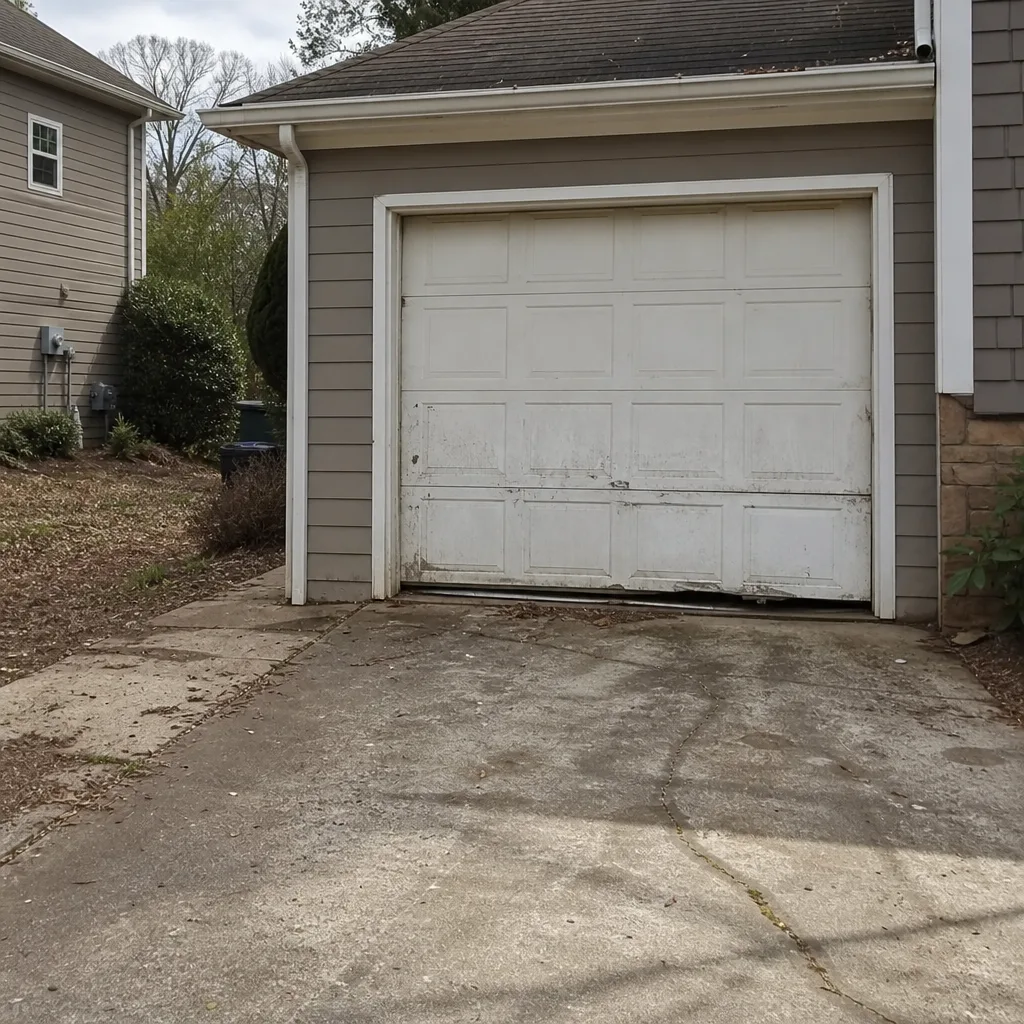 Before
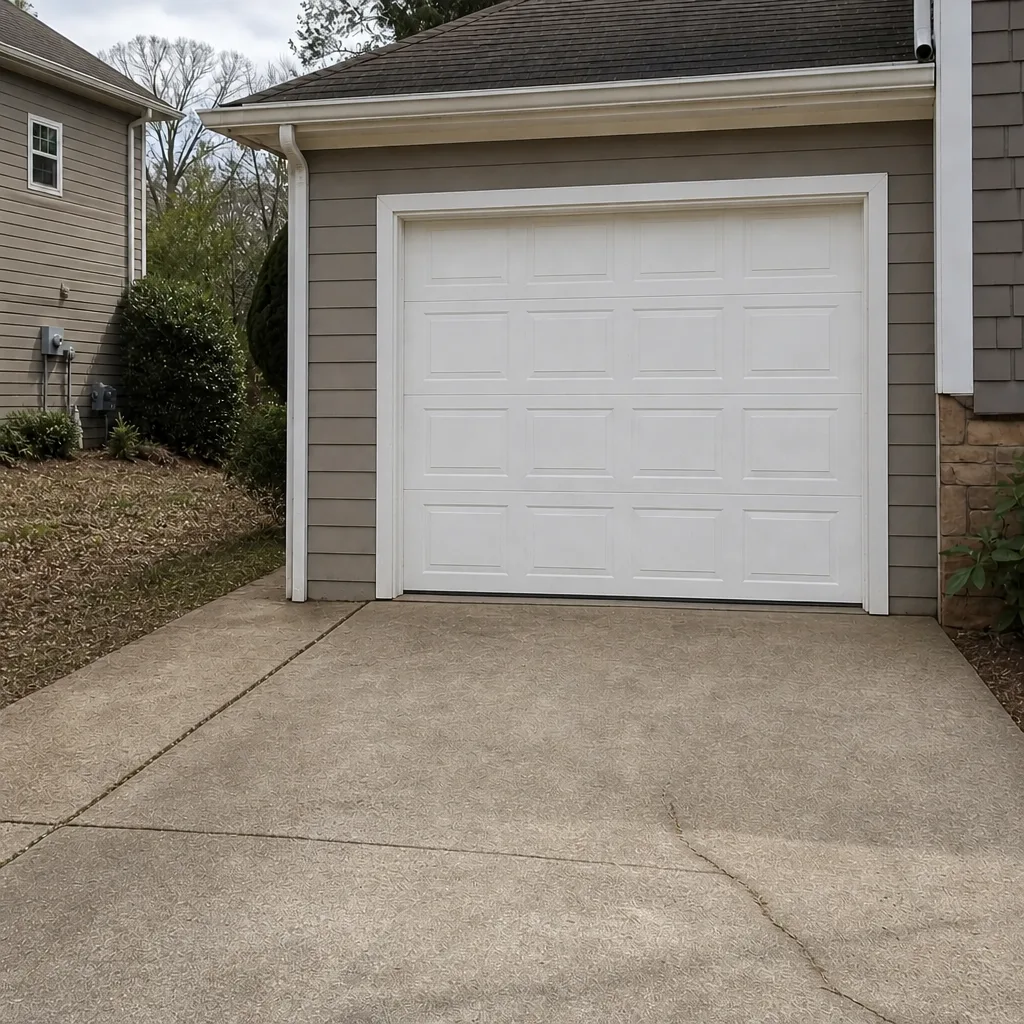 After
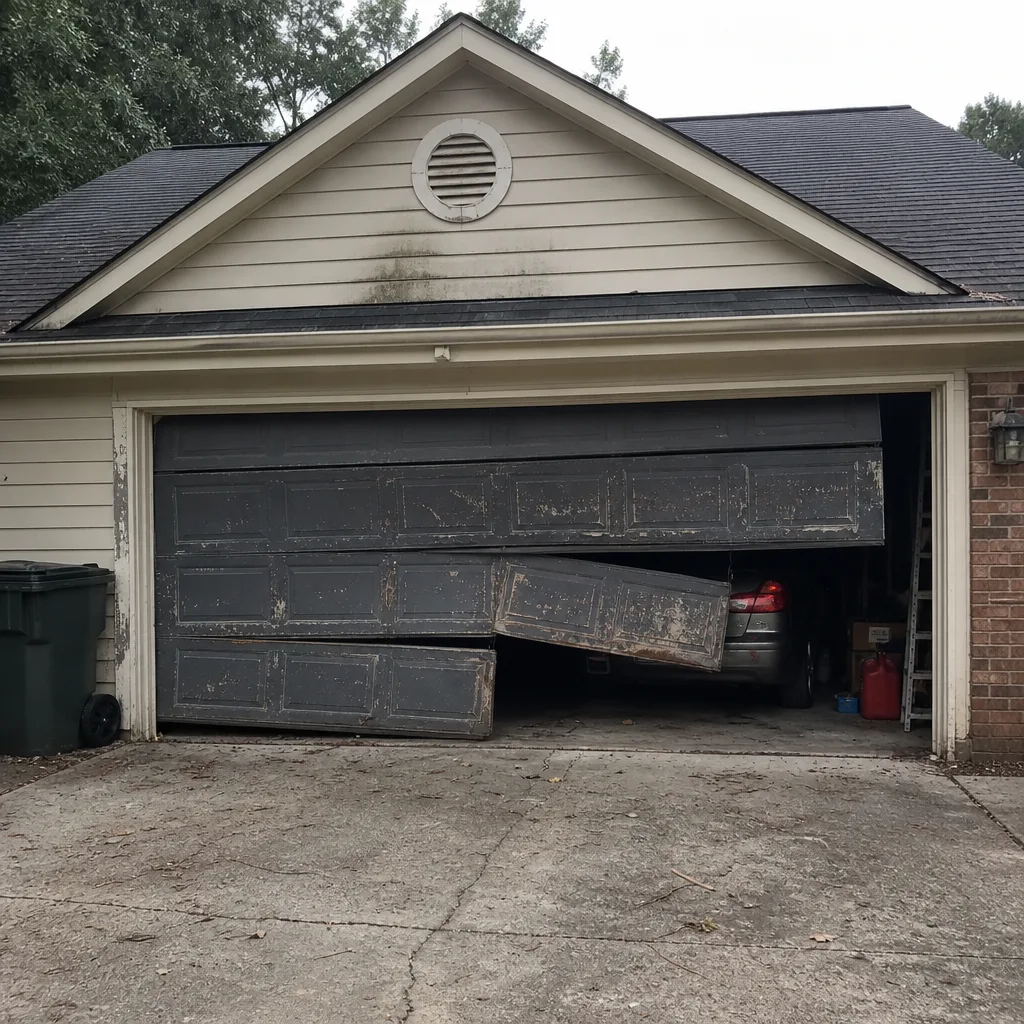 Before
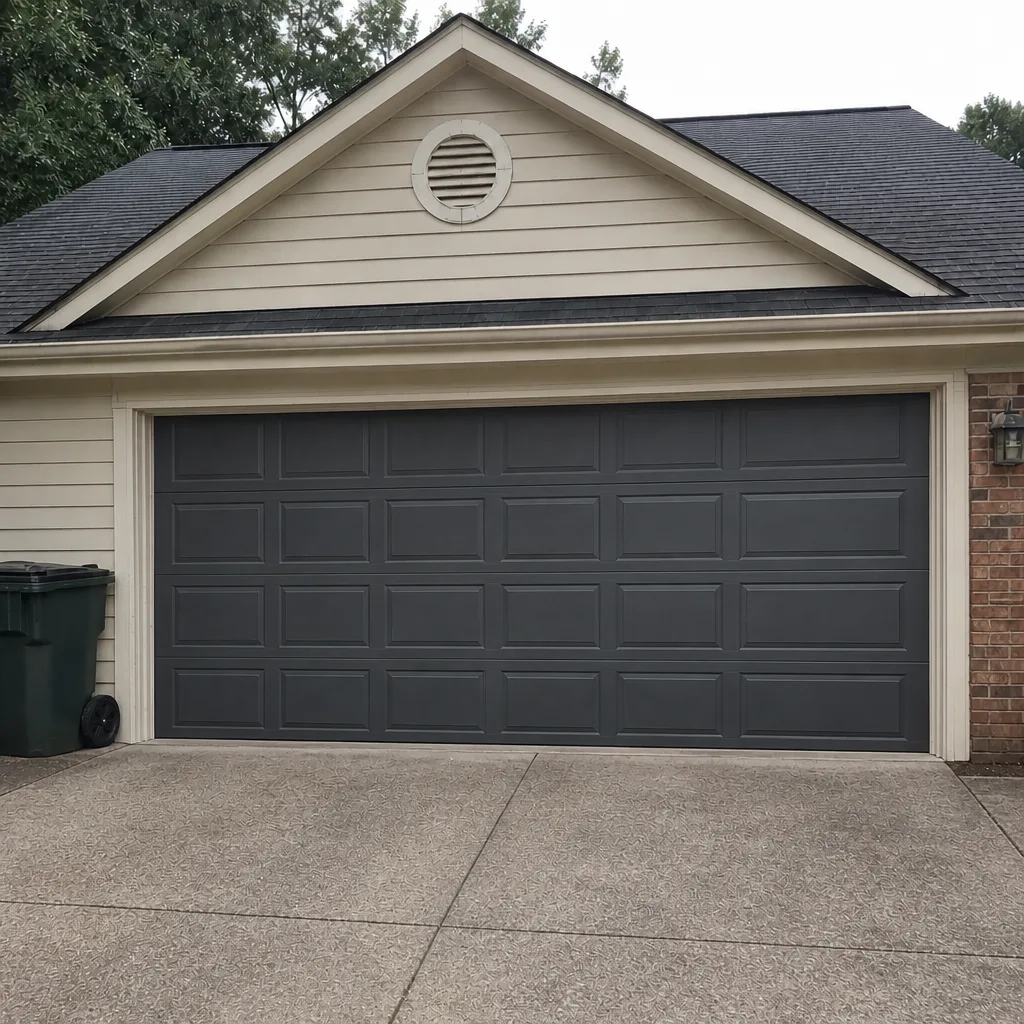 After
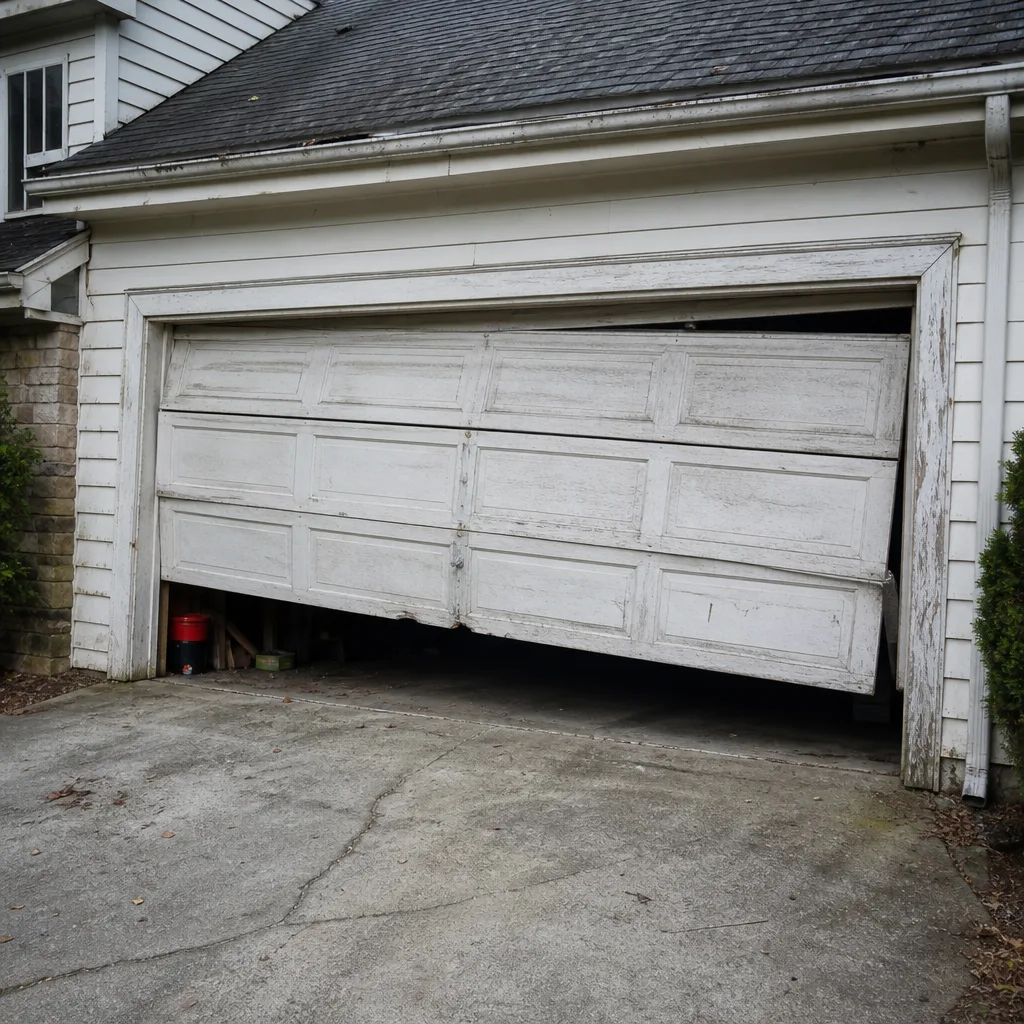 Before
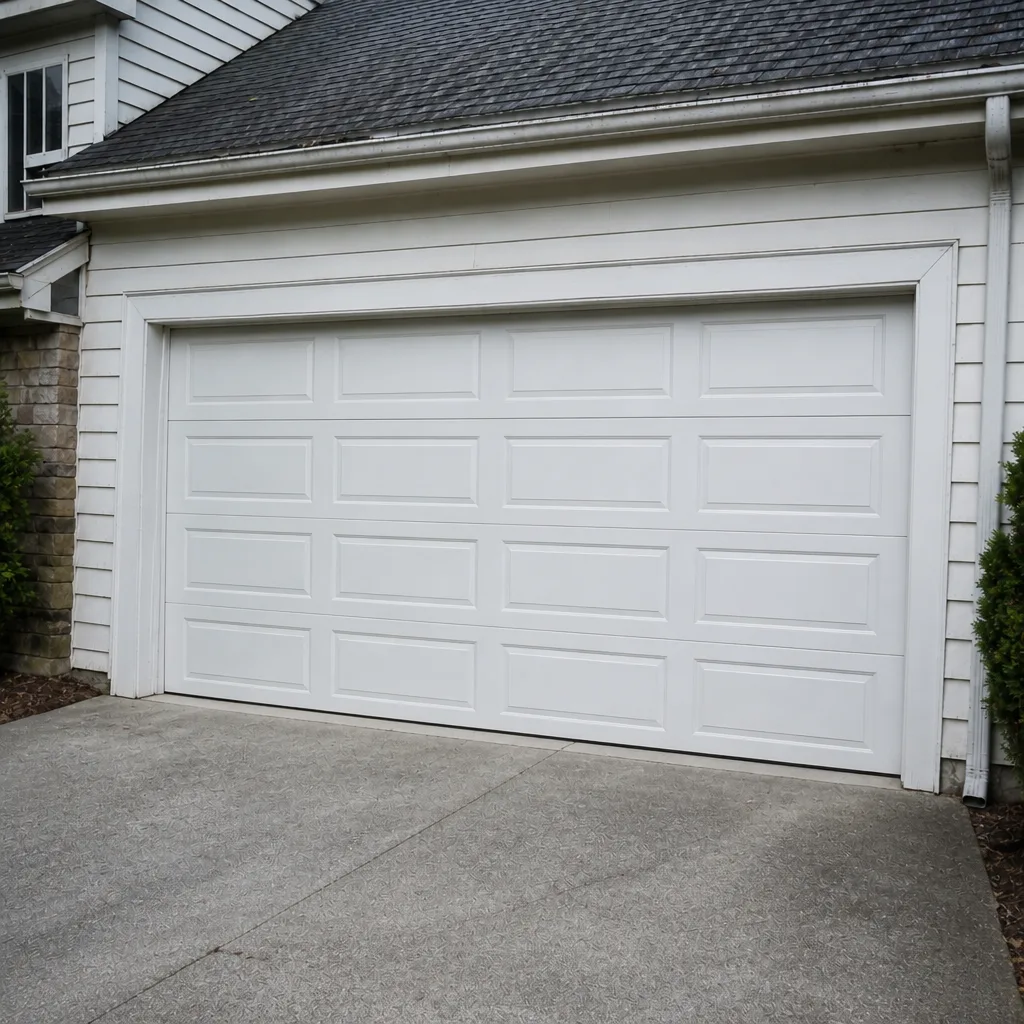 After
When to Call a Professional
There are moments when the right move is a phone call, not a trip to the hardware store. Call a professional when a spring breaks or the door feels suddenly heavy, when the door won’t open or close at all and you’re locked into or out of your home, when the opener grinds, clicks, or runs without moving the door, when a panel is dented or cracked and the door is out of alignment, and when the safety reverse test fails. If a spring is visibly broken or a door has dropped off one track, keep people and vehicles clear and call. Johns Creek Garage Door Repair offers free estimates in Johns Creek, including emergency response when the door won’t move. Same-day service and fast dispatch from 7am to 7pm are available for repairs, and every job starts with a written quote agreed before any work begins. Call (855) 674-0828.
Frequently Asked Questions
Most garage door repairs in Johns Creek fall in a wide range depending on the failed part: a single spring, an opener, a hinge, or a track adjustment. Spring and opener failures are the most common, and both are typically repaired for a fraction of what a new door costs. We give a written estimate before any work starts, so the quote you agree to is the price. Call (855) 674-0828 for an exact quote – estimates are free.
In most cases, yes, for repairs. If the door won’t open, a spring has failed, or the opener has stopped, we offer same-day service with fast dispatch from 7am to 7pm. Emergency service is part of our core lineup, not an exception. The final availability depends on the job and the part, and a technician will confirm that when you call.
No, not once we’ve quoted it. The written estimate is agreed before any work begins, and that’s the price. We inspect the door, diagnose the fault, and give you a written estimate first. Call (855) 674-0828 for an exact quote – estimates are free.
Yes. We connect you with vetted local professionals who are licensed and insured as their state requires. Our technicians have up to 8 years of experience and are trained across LiftMaster, Chamberlain, Genie, Clopay, Amarr, Wayne Dalton, Craftsman, and Raynor systems. Brand familiarity means faster diagnosis and the right part the first time.
In most Johns Creek communities with architectural guidelines, yes. Communities like Country Club of the South and St. Ives have covenants that shape the door style, material, and color, and the review is usually required before a door is ordered. Request your guidelines early and hand them to the estimator so the specification is right from the start.
Usually, yes. In Fulton County’s upper-tier market, a clean, well-maintained door and a properly functioning opener read as a cared-for home, and a compliant door avoids a red flag at the buyer’s inspection. A repair that restores quiet operation and confirms the safety systems is often worthwhile; a full replacement is only needed when the panels and hardware are all failing together.
The Bottom Line
A garage door decision in Johns Creek is never really generic. Your HOA covenant sets the specification, the humidity and heat cycle set the maintenance schedule, and the local home values set the stakes on curb appeal. Whatever your door’s configuration, the pattern is consistent: start with the guidelines, get a written estimate before anyone orders anything, keep up with lubrication and inspection in the humid months, and call a specialist when a spring or opener fails rather than reaching for tools. We work on whatever system you already own and handle the repair, the opener, the spring, and the full replacement under one roof. Call (855) 674-0828 for a free estimate.
Written by the team at Johns Creek Garage Door Repair.