Last updated November 22, 2026
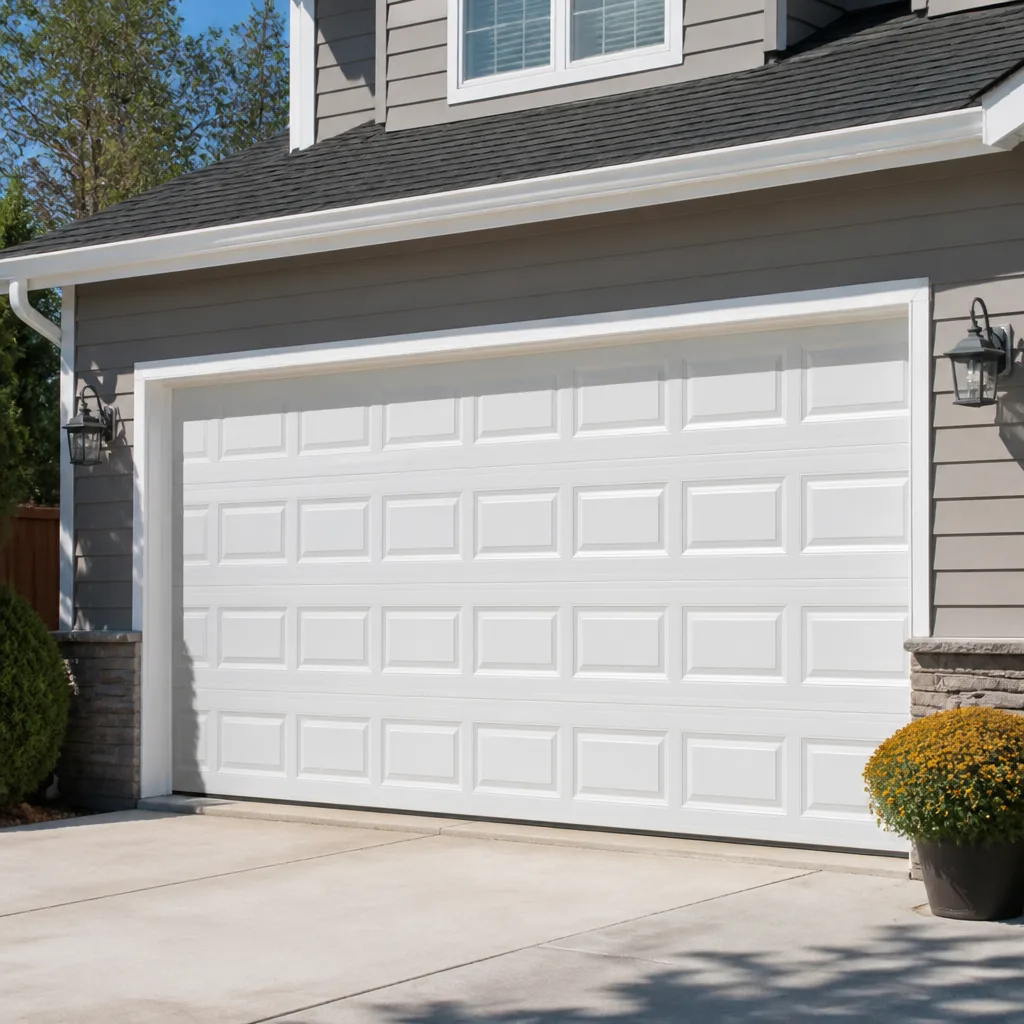 Raised-panel steel
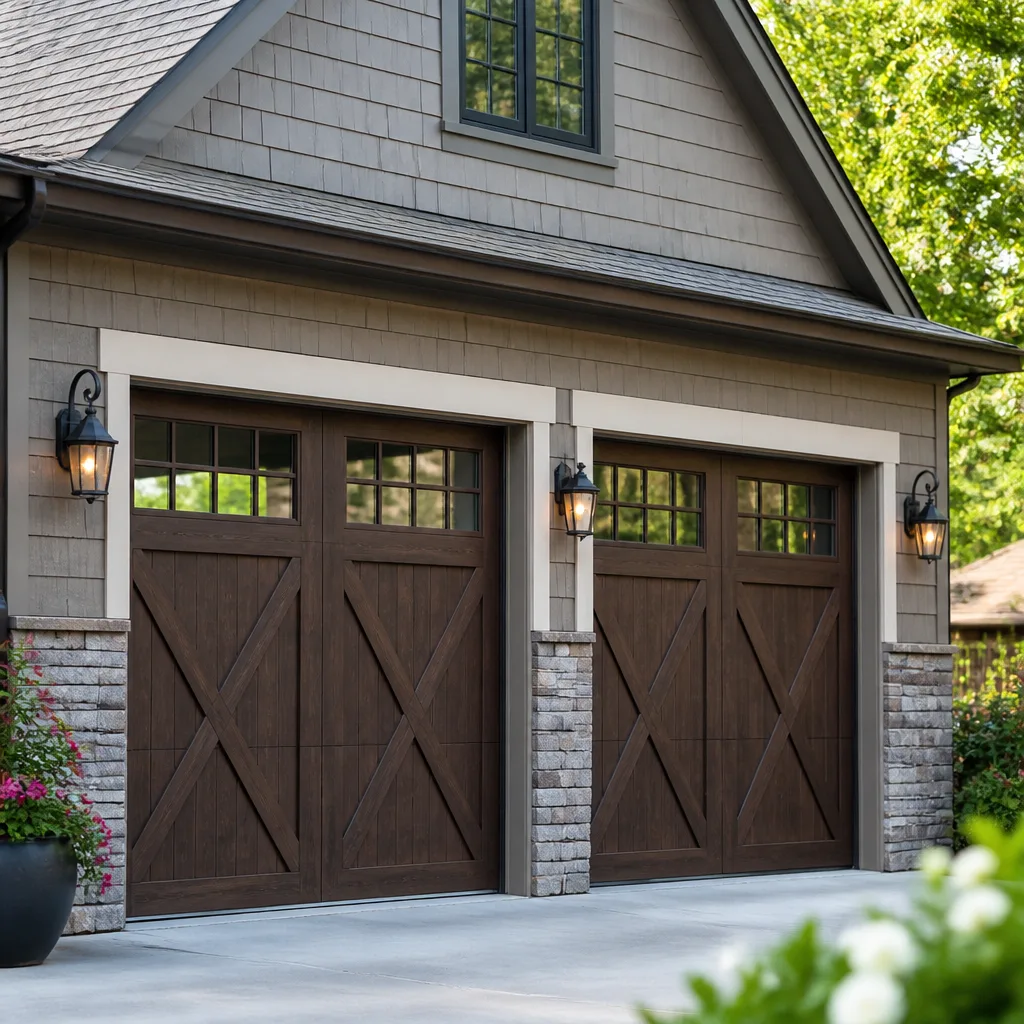 Carriage house
 Modern flush
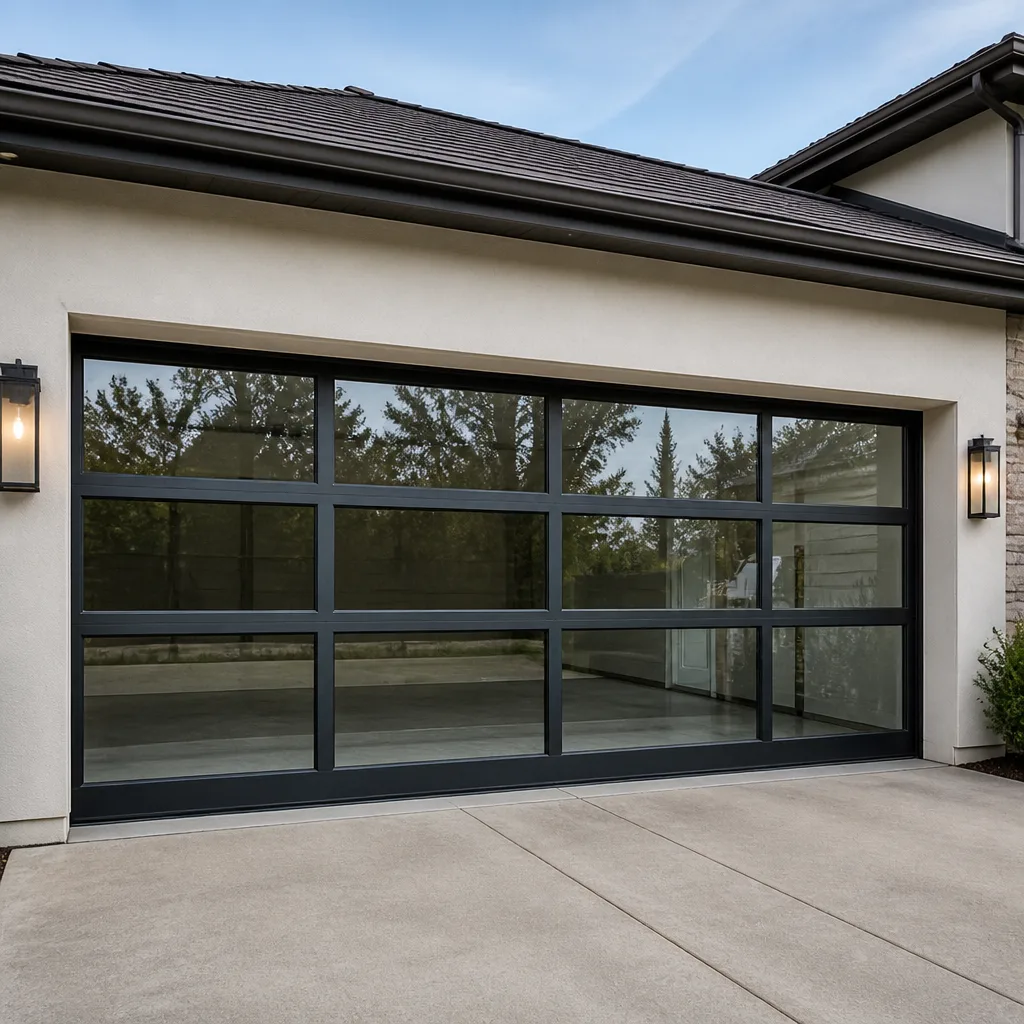 Full-view glass
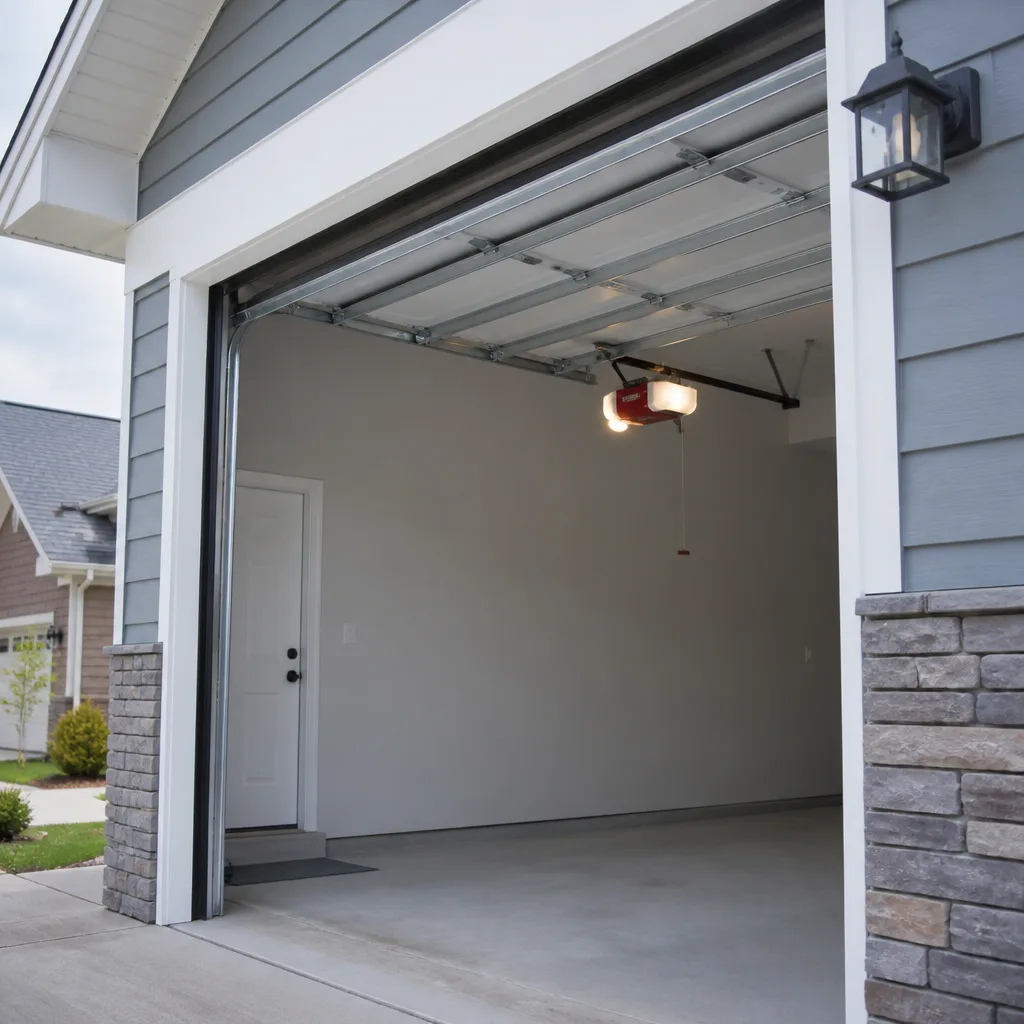 LiftMaster openers
 Chamberlain openers
Full 25-point door and opener safety check with every visit - springs, cables, rollers, tracks, and your LiftMaster or Chamberlain opener included
You get a price before we start. It does not change when the pro arrives.
Get your free estimateGarage Door Permits, Codes & Inspections in Johns Creek, GA: What You Need to Know
Most homeowners assume a garage door is a repair item, not a construction project. That assumption holds up fine until a door gets replaced rather than fixed. In Johns Creek, a full door replacement can fall under the city’s building permit rules, and the paperwork that never got filed tends to surface at the worst possible moment: a home inspection, an insurance claim, or a closing table. A brand-new door that looks perfect for years can still complicate a sale if the permit trail is missing, because the buyer’s inspector asks questions the seller can’t answer. This guide walks through what actually triggers a permit in Johns Creek, how the city’s jurisdiction differs from Fulton County’s, what inspections cover, and how to pull the right paperwork before work starts.
Quick Answer
In Johns Creek, a straight repair – new springs, a replaced opener, new rollers or cables – generally does not require a building permit. A full garage door replacement or a new door installation typically does, because it’s a structural and life-safety component of the home. When in doubt, confirm with the City of Johns Creek Building Division before the work is scheduled, and keep the permit and inspection record with your home files.
Styles & brands we work with
- Raised-panel steel
- Carriage house
- Modern flush
- Full-view glass
- LiftMaster openers
- Chamberlain openers
Table of Contents
- Repair or Replacement? Where the Permit Line Falls
- City of Johns Creek vs. Fulton County: Two Different Rulebooks
- What a Rough-In Inspection Covers for a New Door
- How Unpermitted Work Shows Up on a CLUE Report
- The Johns Creek Permit Application Process, Step by Step
- What Inspectors Look For on a Finished Installation
- How Johns Creek Homes and Weather Shape Garage Door Work
- Questions to Ask Any Garage Door Contractor in Johns Creek
Repair or Replacement? Where the Permit Line Falls
The threshold comes down to one question: are you replacing a component, or replacing the door assembly itself? A repair restores the door you already have. A replacement removes the door and installs a new one, often with new track, brackets, and sometimes a new opener. That second category is what the City of Johns Creek treats as a construction project subject to permitting, because the door, the springs, and the mounting hardware are load-bearing and safety-critical parts of the home.
Here’s how the split usually plays out in practice:
- No permit typically needed: torsion or extension spring replacement, cable replacement, roller and hinge swaps, opener motor or logic board repair, track realignment, weather seal replacement, and safety sensor adjustment.
- Permit typically required: full door removal and replacement, installation of a door in an opening that had none, structural changes to the header or framing around the opening, and any change that alters the door’s rated function or size.
- Gray zone: replacing the door with a substantially different model (different weight class, different spring system, different rated wind or impact performance) can trigger a permit even if the opening stays the same, because the structure has to be evaluated for the new load.
We get asked about this constantly. Homeowners want a clean yes-or-no, and the honest answer is that the size, weight, and structural attachments of the new door determine whether the job is a repair-level swap or a permit-level replacement. That’s why garage door repair and full replacement are quoted and scheduled differently – one is a service call, the other is a construction project with a paper trail.
If your opener still works but the door itself is failing, you may be able to stay on the repair side of the line and avoid the permit process entirely. If the door panel, framing, or track system is beyond repair, plan for the full path. Either way, a specialist should look at it before you commit to a budget.
City of Johns Creek vs. Fulton County: Two Different Rulebooks
This trips up a lot of homeowners along the boundary. The City of Johns Creek sits inside Fulton County, but the city has its own building department and its own permitting process for work inside city limits. Fulton County runs permitting for unincorporated areas and for other cities that contract with the county. They do not share a single process, and they don’t always interpret the same job the same way.
What that means for you:
- Inside Johns Creek city limits: the City of Johns Creek Building Division issues the permit and performs the inspections. Start there, not with the county.
- Just outside the boundary: the property may fall under Fulton County’s jurisdiction even though the mailing address reads Johns Creek. Zip code is not the deciding factor – the city’s jurisdiction map is.
- Homes near Alpharetta, Roswell, or Duluth lines: confirm which city’s building department has authority before you file anything. Filing in the wrong place wastes time and can cloud the record later.
The practical rule: check the jurisdiction first, then the requirement. A homeowner in Johns Creek near the Alpharetta line and a homeowner in the same neighborhood on the Fulton County side can be working under two different sets of rules for what looks like the same job. If you’re not sure which side you’re on, the city’s planning and building office can tell you in a single call – and it costs nothing to ask.
We’ve seen confusion here damage timelines more than any inspection finding. A permit filed with the wrong department can sit for weeks before anyone flags it. Get the jurisdiction nailed down before the door is ordered, not after. For jobs handled through garage door installation, we point owners to the correct office up front so the paperwork moves in parallel with the scheduling.
What a Rough-In Inspection Covers for a New Door
A rough-in inspection happens before the door goes on its final hardware. An inspector looks at the opening, the framing, and the mounting conditions while they’re still accessible, and signs off that the structure can safely carry the new door and spring system. This is the part of the process that gets skipped most often, and it’s usually skipped by contractors who aren’t used to permit-level work.
What the rough-in typically checks:
- Header and framing integrity: the framing above the opening has to be sized and fastened correctly for the door’s weight and the torsion or extension spring loads.
- Structural attachment of the track and brackets: mounting points must land in solid structure, not just drywall or thin sheathing.
- Clearance and dimensions: the opening is measured against the door’s specified dimensions so the finished unit fits and operates within its rated performance.
- Safety components in place: the counterbalance system, safety cables, and attachment points are reviewed for correct installation.
- Electrical provisions for the opener: the outlet and wiring location are verified if a new opener is part of the job.
In our experience, the rough-in is where a good installation gets its foundation. If a contractor proposes to skip it, or doesn’t mention it at all, ask directly whether the job requires one. Some jobs don’t, and some do. A contractor who can’t answer that question clearly is probably not pulling permits on the work they do.
- Confirm with the city whether your job requires a rough-in.
- Make sure the contractor schedules it before hanging the door.
- Get the inspection record into your home file.
- Verify the final inspection after the door is operating.
How Unpermitted Work Shows Up on a CLUE Report
A CLUE report (Comprehensive Loss Underwriting Exchange) is a claims history database that insurers use when underwriting a policy. It tracks claims filed against a property, not permits pulled on it. Those are two different records, and they don’t reference each other. But here’s where unpermitted garage door work can create trouble: if a door fails and a claim gets filed, an adjuster can ask for documentation that the work was done correctly, and a missing permit can complicate that review.
The chain usually looks like this:
- A door was replaced without a permit and without an inspection.
- Years later, a spring fails or a door comes out of its track and damages the car or the surrounding structure.
- The homeowner files an insurance claim, and the insurer asks for the installation record.
- No permit and no inspection mean there’s no documented proof the structure was evaluated for the load – and the claim review gets difficult.
We don’t say this to alarm anyone. Most unpermitted garage doors never cause a claim. Most unpermitted doors also work fine for years. But when a claim does get filed, the paper trail matters, and that paper trail is cheapest to create at the time the work is done. Insurance underwriting rules vary by carrier and aren’t something we can speak to directly – if you have questions about how your carrier treats unpermitted work, ask your agent. What we can tell you is that having the permit and inspection record on hand makes any conversation with an insurer simpler.
The same record matters at resale. Buyers and their inspectors ask for permit history on major components, and a missing permit on a garage door can trigger a request for retroactive inspection or a credit at closing. Pulling the permit up front costs a fraction of the friction it prevents later.
The Johns Creek Permit Application Process, Step by Step
Filing for a garage door permit in Johns Creek is not a mystery, but the details depend on the current application method and the scope of the job. Here’s the general path:
- Confirm jurisdiction and requirement. Verify your property is inside Johns Creek city limits and that the job is a permit-level replacement rather than a repair. A quick call to the Building Division before you start saves time.
- Gather the scope of work. You’ll need the door model, dimensions, weight class, spring type, and installation method. A licensed contractor supplies this; if you’re pulling the permit as an owner-builder, you’ll need to assemble it yourself.
- Submit the application. The City of Johns Creek accepts permit applications through its building department. The current submission method – online portal, in-person, or mail – and turnaround time depend on the office, so confirm the current process when you call. Typical reviews run days, not weeks, but scheduling varies with volume.
- Pay the permit fee. Garage door permit fees are relatively modest compared to the door itself, but confirm the current fee schedule with the city. We don’t quote permit fees – those go directly to the city.
- Schedule the rough-in (if required) before the door goes on. Confirm the inspection requirement when the permit is issued.
- Complete the install and schedule the final inspection.
- File the approved permit and inspection record with your home documents. This is the paper trail you’ll want at resale or claim time.
One point homeowners ask about constantly: turnaround time. The honest answer is that it varies. When the city is busy, reviews take longer. When it’s quiet, they move quickly. Plan for a week as a buffer if the door’s arrival is time-sensitive. A contractor who is familiar with the local process can usually advise on current timing more accurately than any fixed estimate. If you’re already working with garage door opener repair for a separate issue, ask about the permit process for the door replacement at the same visit – it saves a second appointment.
What Inspectors Look For on a Finished Installation
The final inspection is usually quicker than the rough-in, but it’s not a formality. An inspector verifies that the door is installed correctly and operates safely before signing off. What they check on a finished door in Johns Creek:
- Proper attachment: track brackets, torsion tube, and header brackets are fastened into structure, not just surface material.
- Balanced door: the door opens and closes smoothly with the springs carrying the weight. A door that binds, races, or drops is not passing.
- Spring and cable condition: correct springs installed for the door’s weight, safety cables properly routed on extension spring systems.
- Safety devices: the auto-reverse mechanism and photo-eye sensors function as intended. The door should stop and reverse when the sensors are broken.
- Opener compliance: if an opener is part of the job, the force settings, travel limits, and safety reverse are adjusted to the door.
- Weather seal and gap: the door sits squarely in the opening, with the seal making contact and no significant gaps along the floor or sides.
Most of this passes the first time when the installation was done right. The failures we hear about usually trace back to a door installed without adequate framing, a spring set mismatched to the door weight, or an opener never adjusted to the door’s actual travel. Those aren’t inspection problems – they’re installation problems the inspection caught. A door that’s installed correctly is a door that’s ready to pass.
How Johns Creek Homes and Weather Shape Garage Door Work
Johns Creek sits in north Fulton County, and the climate here shapes garage door wear in ways that don’t apply in drier parts of the country. Summers are humid and warm, winters occasionally dip below freezing, and spring storms bring wind-driven rain. None of that is dramatic in itself, but over a few years it does specific things to garage door components.
What we see commonly in Johns Creek:
- Humidity-driven corrosion: hinges, bearings, and opener chain drive hardware corrode faster in a climate that stays humid through the warm months. Annual lubrication matters more here than in dry climates.
- Spring fatigue: torsion springs cycle twice per open-close, and a family that uses the door several times daily will hit the end of spring life faster than the same door in a household that uses it once a day. Humidity does not shorten spring life much, but usage does.
- Weather seal wear: the bottom seal takes a beating from heat and sun exposure. Seals harden and crack, which lets water in during spring storms and drafts in during winter cold snaps.
- Panel and track movement: seasonal temperature swings cause wood framing to move, and a door that was aligned perfectly in one season can start rubbing by another. That’s a track and alignment issue, not a door problem.
Hail is uncommon in this part of Georgia, so the door itself rarely takes impact damage from weather. The bigger issues are wear and installation quality. Neighborhoods across Johns Creek – and the surrounding communities – see the same pattern, and it’s why a technician who works here regularly can spot the signs faster than a generalist. Familiar brands help too. Our technicians work on doors and openers from LiftMaster, Chamberlain, Genie, Raynor, Clopay, Amarr, Wayne Dalton, and Craftsman regularly, which means we’re not guessing at parts or spec sheets. If you’re on a Raynor or ChamberIain system and want to know where the permit line falls for your specific door, the answer usually comes from the door’s weight and mounting, not the brand. For broader repair help on a door that’s misbehaving, the team at Johns Creek garage door repair handles the diagnostics.
Questions to Ask Any Garage Door Contractor in Johns Creek
Before any garage door replacement begins in Johns Creek, the homeowner should be able to answer five questions about the contractor. If you can’t, ask them. A good contractor will answer clearly and without hesitation.
- Will this job require a permit? A contractor who works here regularly knows the repair-versus-replacement line and can tell you the answer without deflecting.
- Are you pulling the permit, or am I? Either arrangement can work, but the answer needs to be clear before work starts.
- Who schedules the inspections? On permit-level work, the rough-in and final inspections need to be scheduled. Find out who’s responsible.
- What happens if the inspection fails? A contractor who does permit-level work routinely should have a clear answer about corrections and re-inspection.
- Will I get the permit and inspection record at completion? The homeowner should end up with copies. If someone else holds the record, you don’t have it.
The other thing to ask: are they working to a written scope with a quoted price before installation begins? Every job we handle starts with a written estimate. The quoted price is the price, and the work doesn’t start until it’s agreed. That applies to permit-related line items too, including any coordination involved.
Common Mistakes to Avoid
- Assuming “repair” means any job under a certain dollar amount. The permit line is about scope, not cost. A cheaper replacement still needs a permit; an expensive spring upgrade doesn’t.
- Filing with Fulton County when the property is inside Johns Creek city limits. Those are two different departments. Check the jurisdiction map or call the city before you file anywhere.
- Skipping the rough-in inspection because the job “looks simple.” If the permit requires it, the inspector needs to see the framing before the door goes up. Once the door is hung, that access is gone.
- Treating the permit record as the contractor’s job alone. Homeowners should end up with copies of the approved permit and inspection reports. Ask for them at completion.
- Ordering the door before confirming the jurisdiction and the permit requirement. A door ordered for a project that needs a permit and a rough-in can sit in the garage for weeks waiting on inspections, and the timeline gets harder to control.
- Letting an unpermitted door drift into a resale. The permit isn’t just for now. Buyers ask, inspectors ask, and the paperwork gap gets harder to fix the further in the past the work moves.
- Assuming every contractor handles permits. Not every garage door installer is set up for permit-level jobs. Ask before you sign, not after the door is delivered.
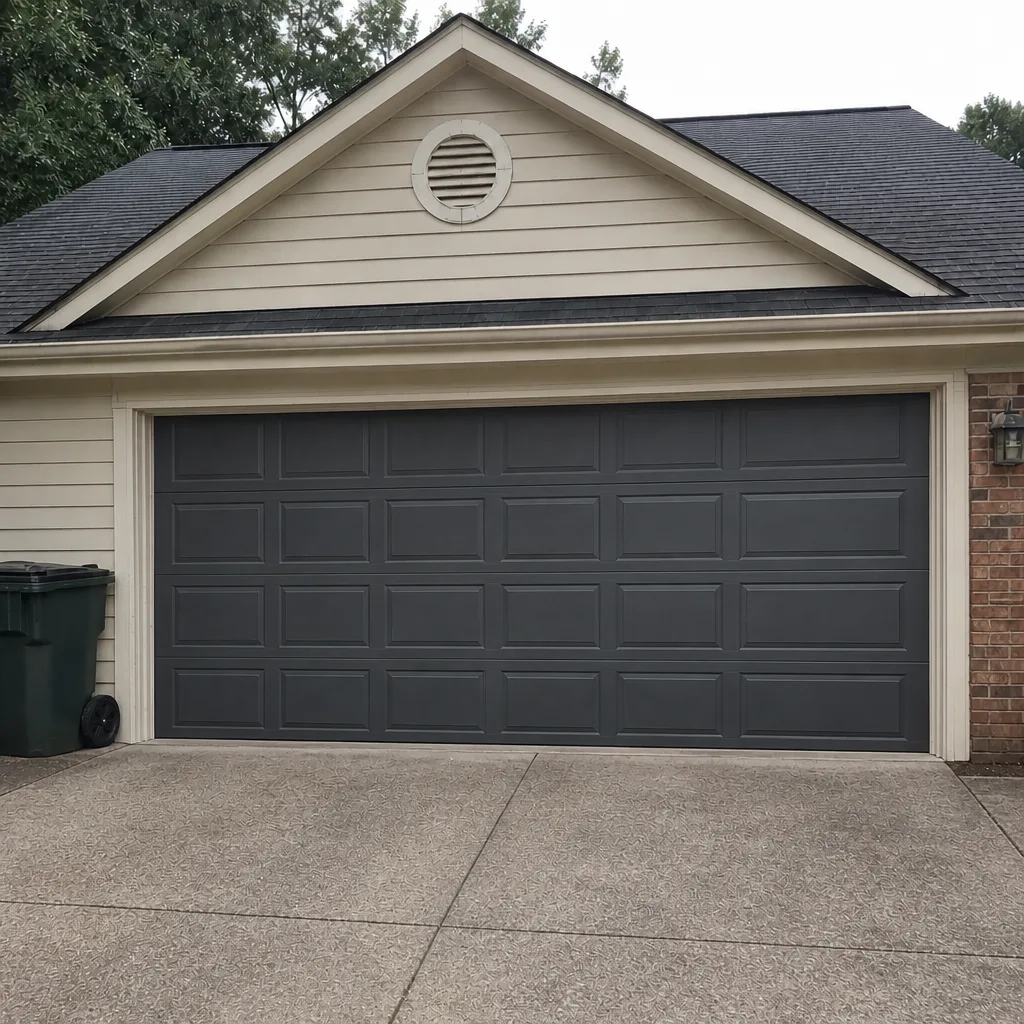
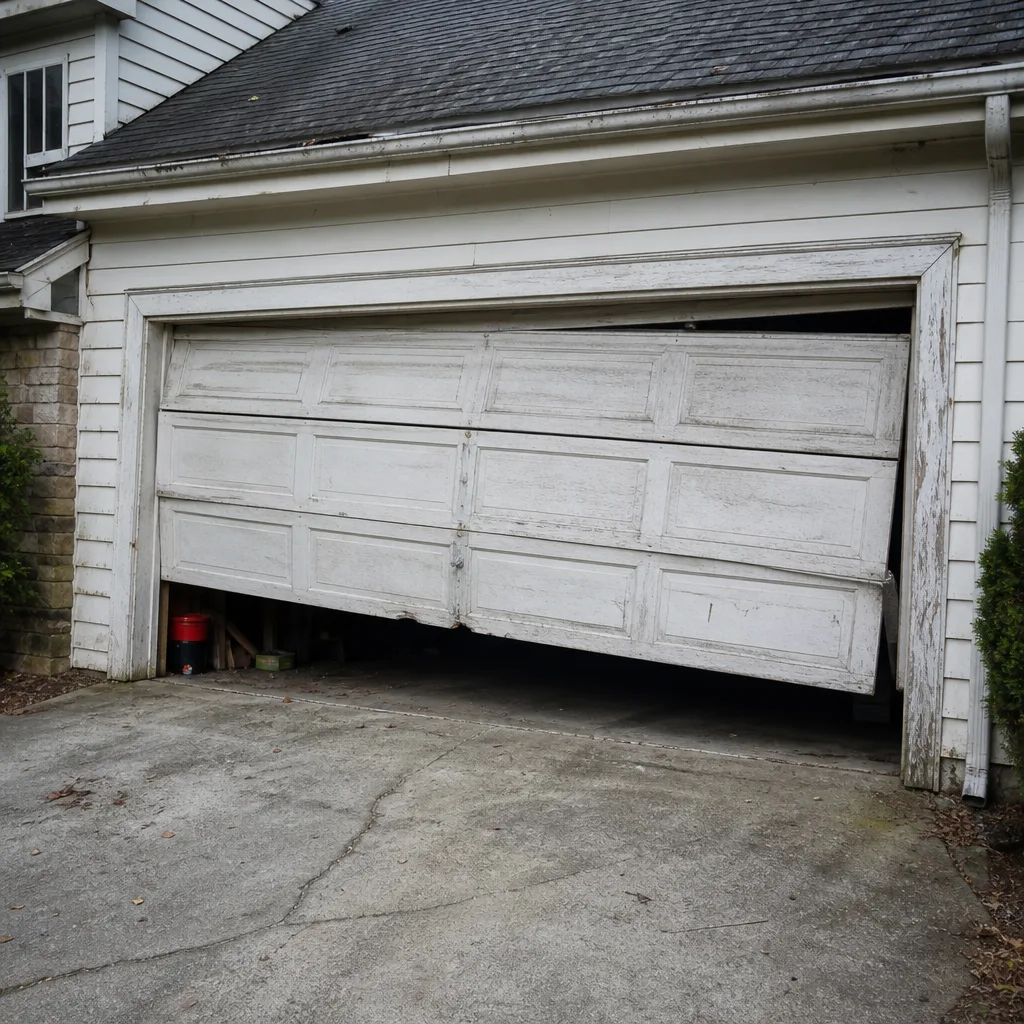
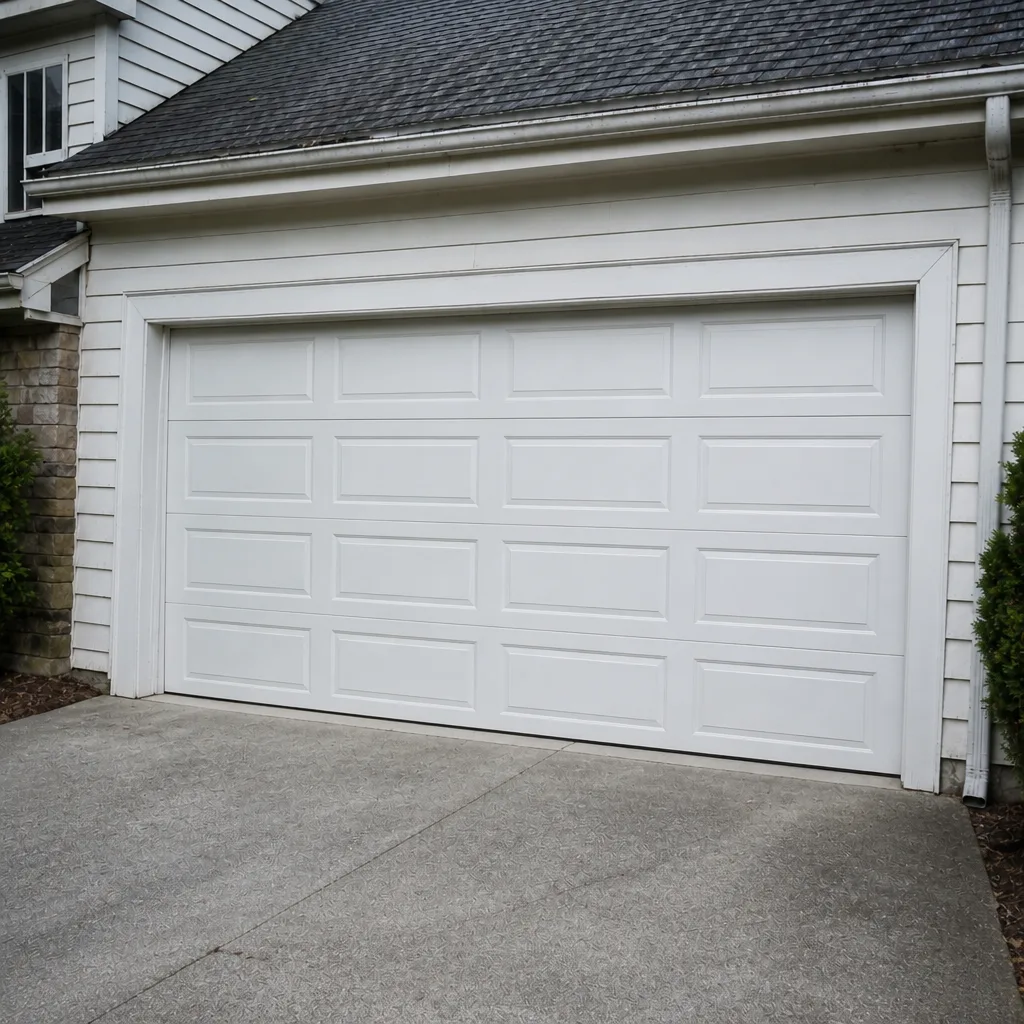
See the difference
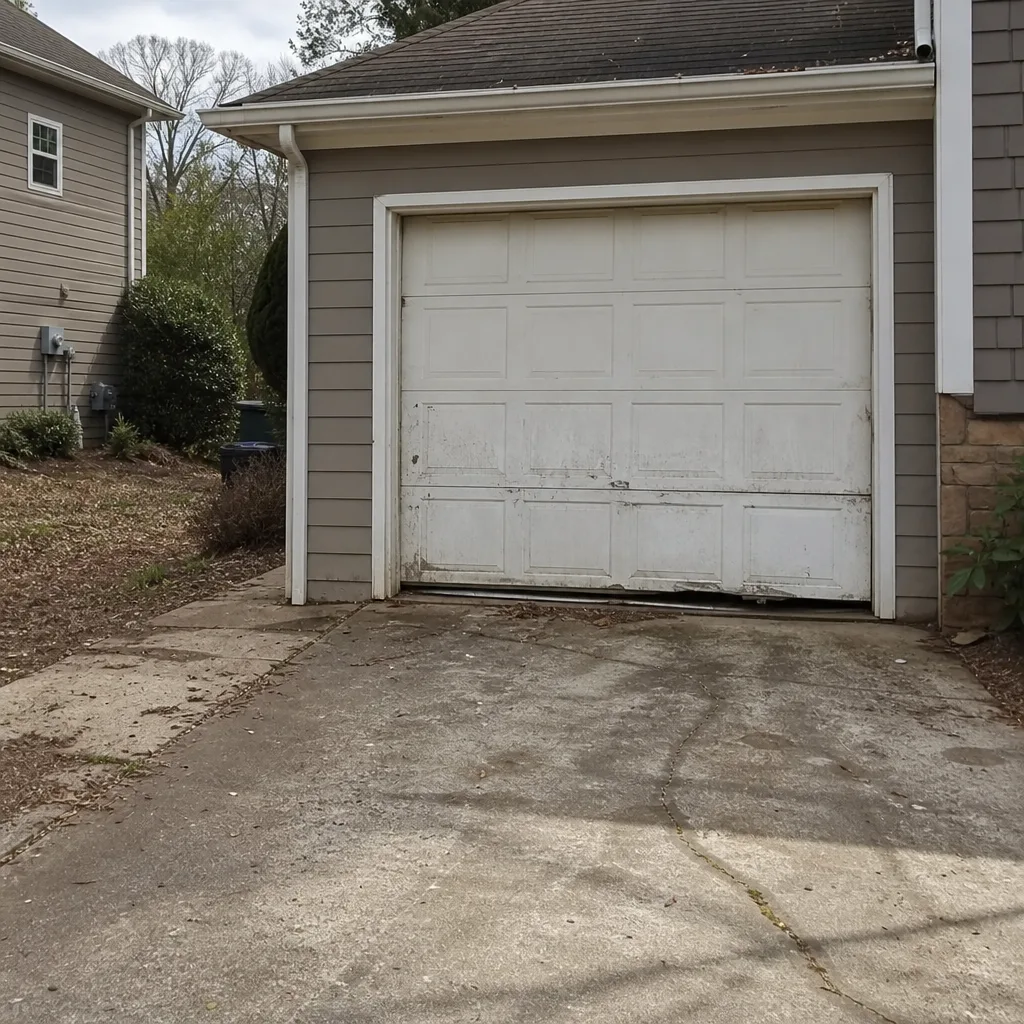 Before
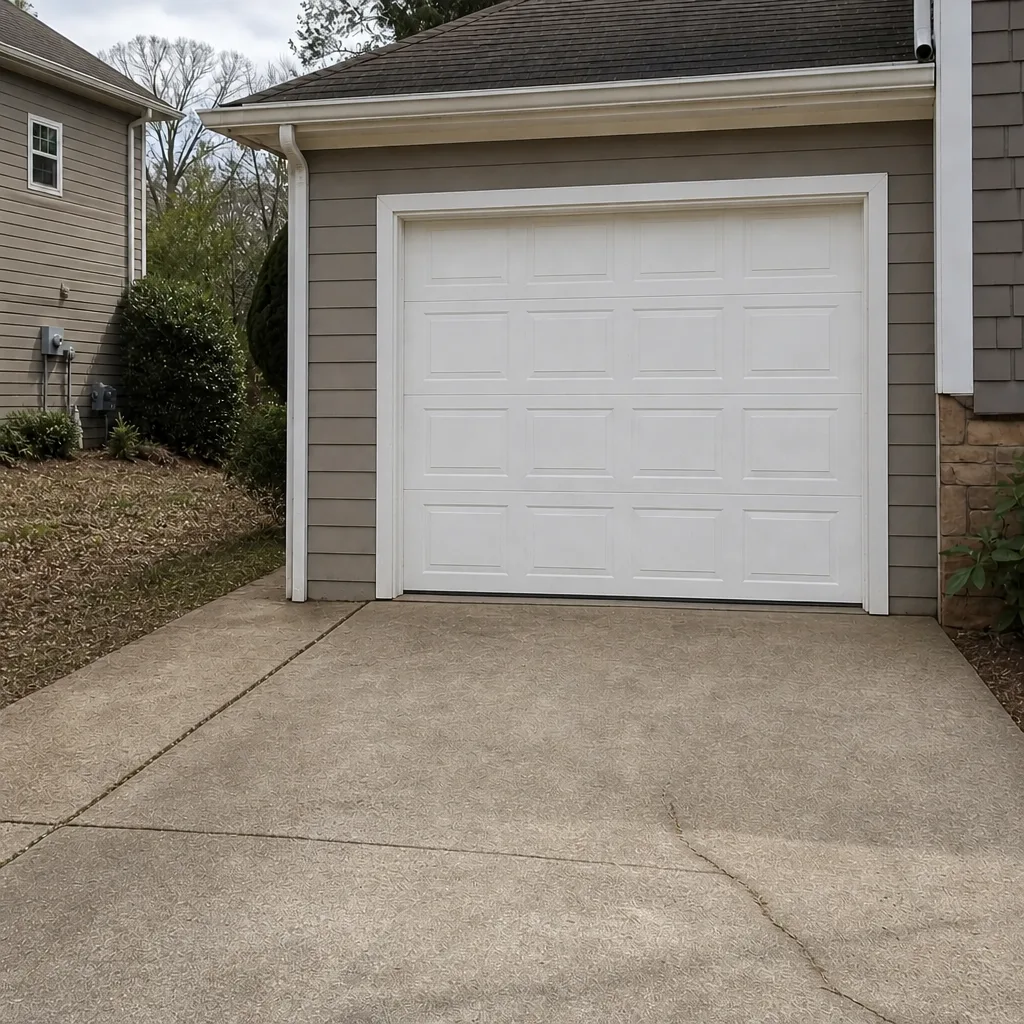 After
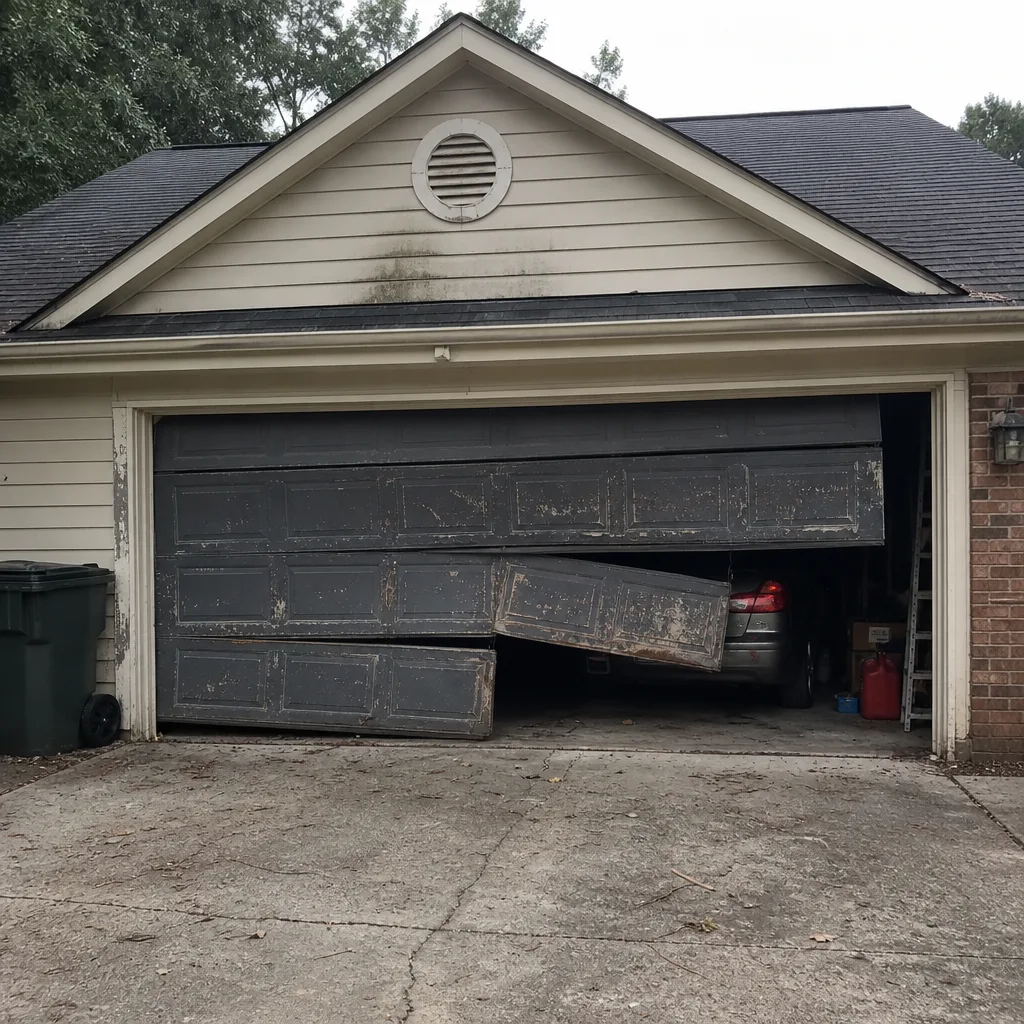 Before
 After
 Before
 After
When to Call a Professional
Some garage door work belongs in the hands of a trained technician, and spring work sits at the top of that list. Torsion and extension springs are under high tension and can cause serious injury if the wrong technique or the wrong tool is used – this is a job for a professional, not a weekend project. The same goes for cable replacement, which carries similar risk. Opener repair at the electrical or logic board level is another one we’d recommend leaving to someone trained on it. Beyond the safety side, permit-level work needs a contractor who knows the process and can schedule inspections correctly. Johns Creek Garage Door Repair offers free estimates in Johns Creek – call (855) 674-0828 to schedule a look at your door or to talk through the requirements for your project.
Frequently Asked Questions
In most cases, yes. A full garage door replacement – removing the existing door and installing a new one – is typically a permit-level project in Johns Creek, while a repair like a spring replacement usually is not. Confirm the specific requirement with the City of Johns Creek Building Division before the work is scheduled. Call (855) 674-0828 if you want help identifying which side of the line your job falls on.
Permit fees are set by the city, not by the contractor, and they vary with the scope of the job. The fee for a garage door permit is a modest line item compared to the door itself, but we don’t quote permit fees – the city does. The best way to get the current number is to call the Building Division directly or check their published fee schedule. Once the job scope is defined, the permit fee is a known quantity. Call (855) 674-0828 to talk through the project scope, then confirm the fee with the city.
The rough-in happens before the door is installed and checks the framing, header, and mounting conditions; the final inspection happens after the door is up and operating and verifies safety, balance, and proper attachment. Both may be required depending on the scope of the job. The rough-in is the one that gets skipped most often, because it has to happen in the narrow window before the door goes on. If you’re not sure which inspections apply to your project, ask the city when the permit is issued. For questions on your door’s current condition, call (855) 674-0828.
You can sell a home with an unpermitted garage door, but it may complicate the process. A buyer’s inspector can ask for permit history on major components, and if there’s no record, they may request a retroactive inspection or a closing credit. The cleanest path is to sort out the permit and inspection record before listing, not during negotiations. If a permit was missed, the city can advise on retroactive options. Call (855) 674-0828 if you’d like someone to look at the door before you list.
It can, particularly if a claim gets filed. Insurers use claims history reports (CLUE) rather than permits, but when a claim comes in, an adjuster may ask for installation documentation. No permit and no inspection can make that review harder. Coverage rules vary by carrier, so the specific answer for your policy comes from your agent. The practical move is to keep the permit and inspection record on file, which makes any future claim review simpler. Call (855) 674-0828 to plan a permit-compliant replacement.
No. Spring replacement, cable work, roller and hinge swaps, and opener repair are service-level work that doesn’t change the door assembly and typically doesn’t require a building permit. That’s a big part of why we keep spring repair on the same call as the rest of our work – it’s a precision service, not a construction project. If your door needs springs instead of a full replacement, that simplifies the process considerably. Call (855) 674-0828 for a free estimate.
The Bottom Line
The permit line for garage doors in Johns Creek comes down to scope: a repair is generally service work, and a full replacement is generally a construction project with paperwork behind it. Check jurisdiction first, since City of Johns Creek and Fulton County are separate processes. If the job is permit-level, plan for a rough-in before the door goes up and a final inspection before the job closes. Keep the records. The permit isn’t a bureaucratic formality – it’s the paper trail you’ll want at resale or when an insurer asks questions years later. The cost of doing it right is small next to the friction of doing it twice.
If you’re ready to sort out a replacement, a repair, or a spring issue in Johns Creek, call Johns Creek Garage Door Repair at (855) 674-0828 for a free estimate. We’ll walk you through whether your job needs a permit, who needs to schedule the inspections, and what the work involves before anything gets ordered – and the price you agree on is the price on the invoice.
Written by the team at Johns Creek Garage Door Repair.