Last updated November 22, 2026
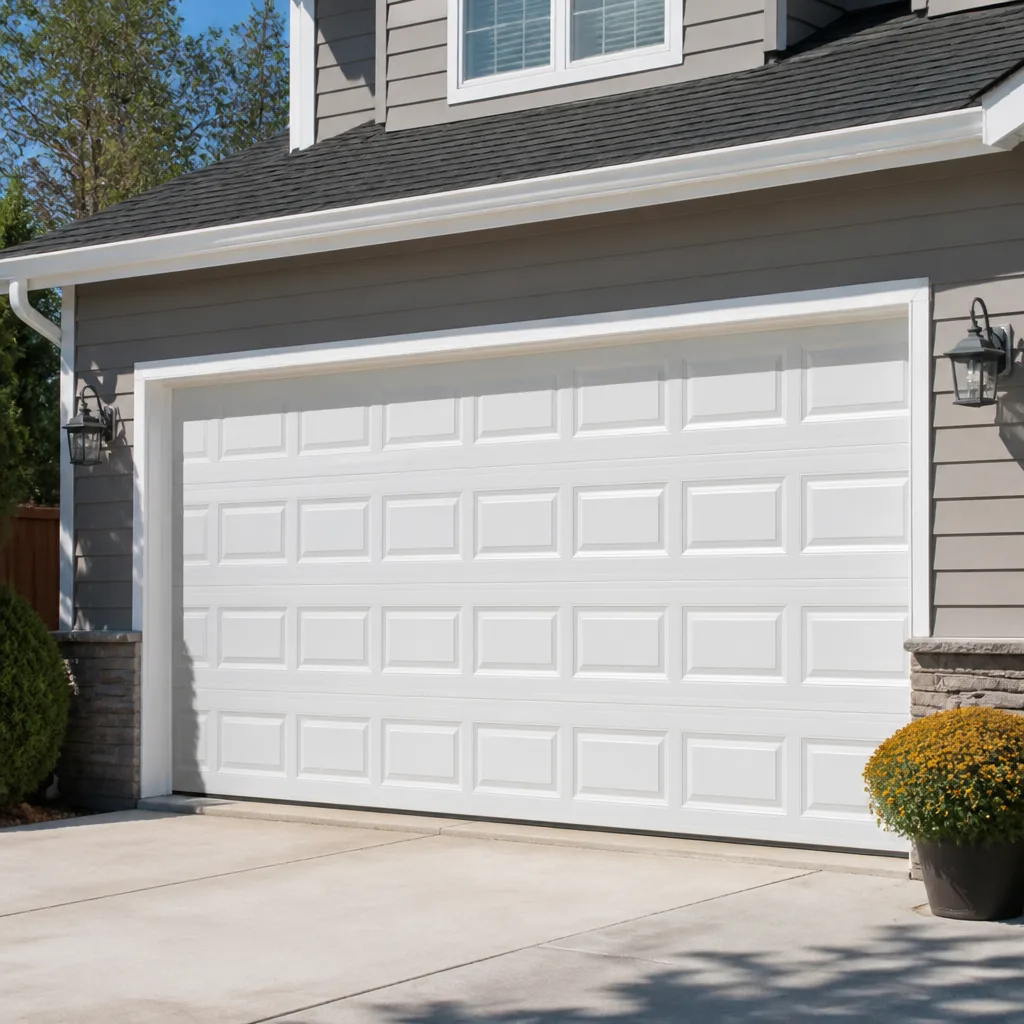 Raised-panel steel
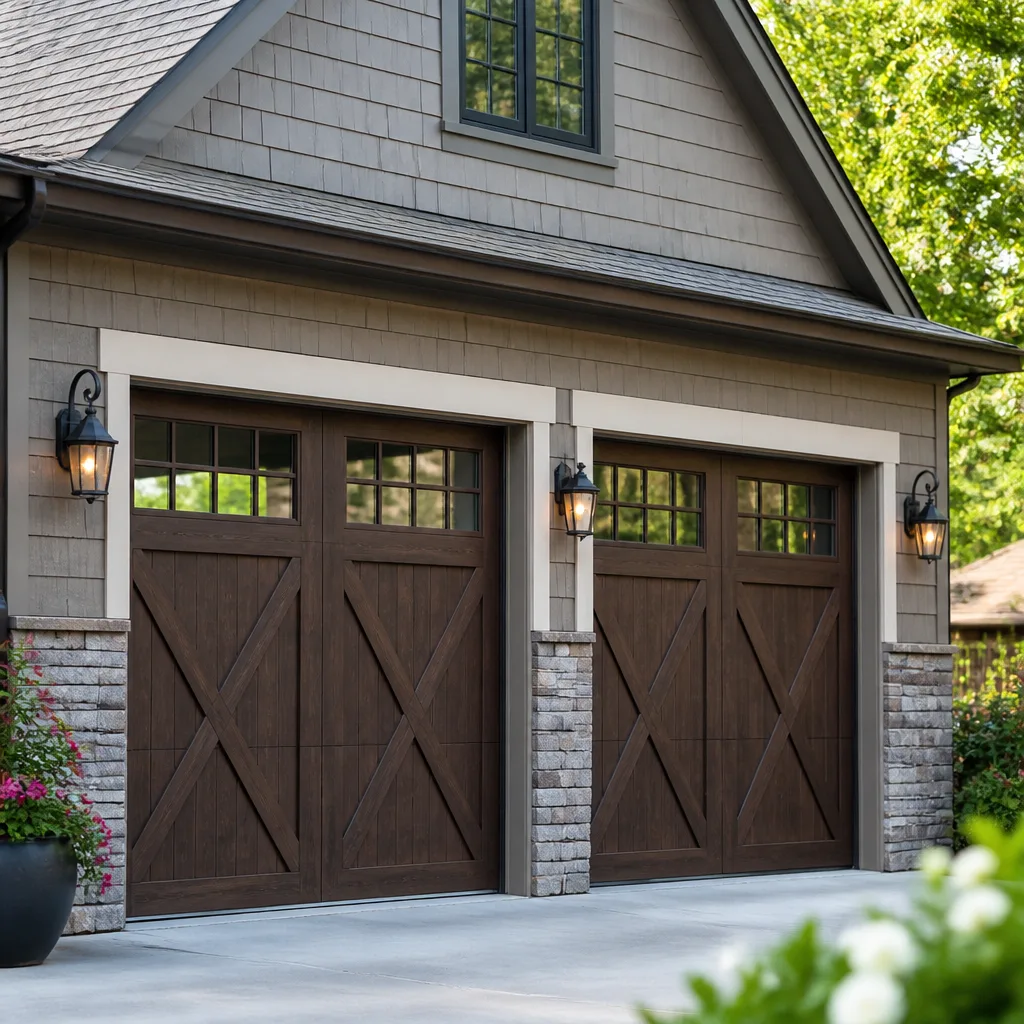 Carriage house
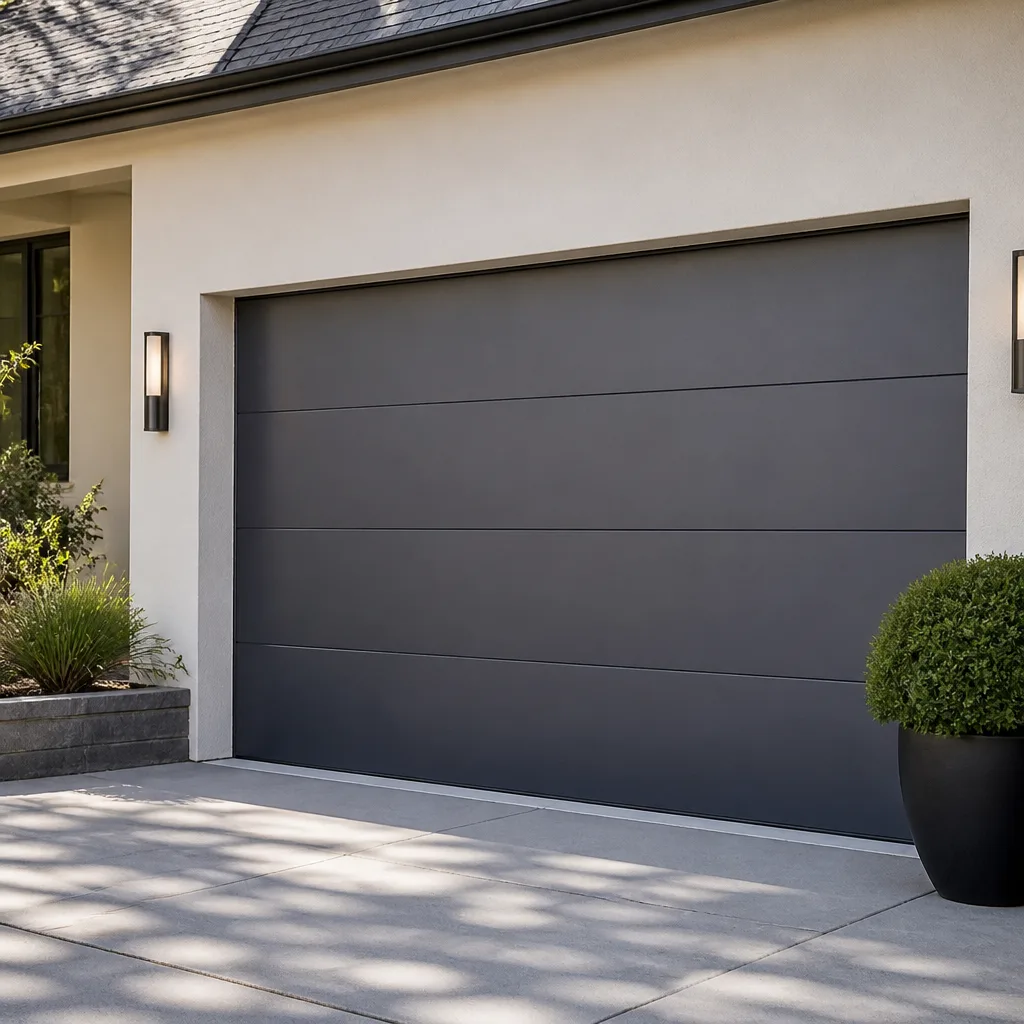 Modern flush
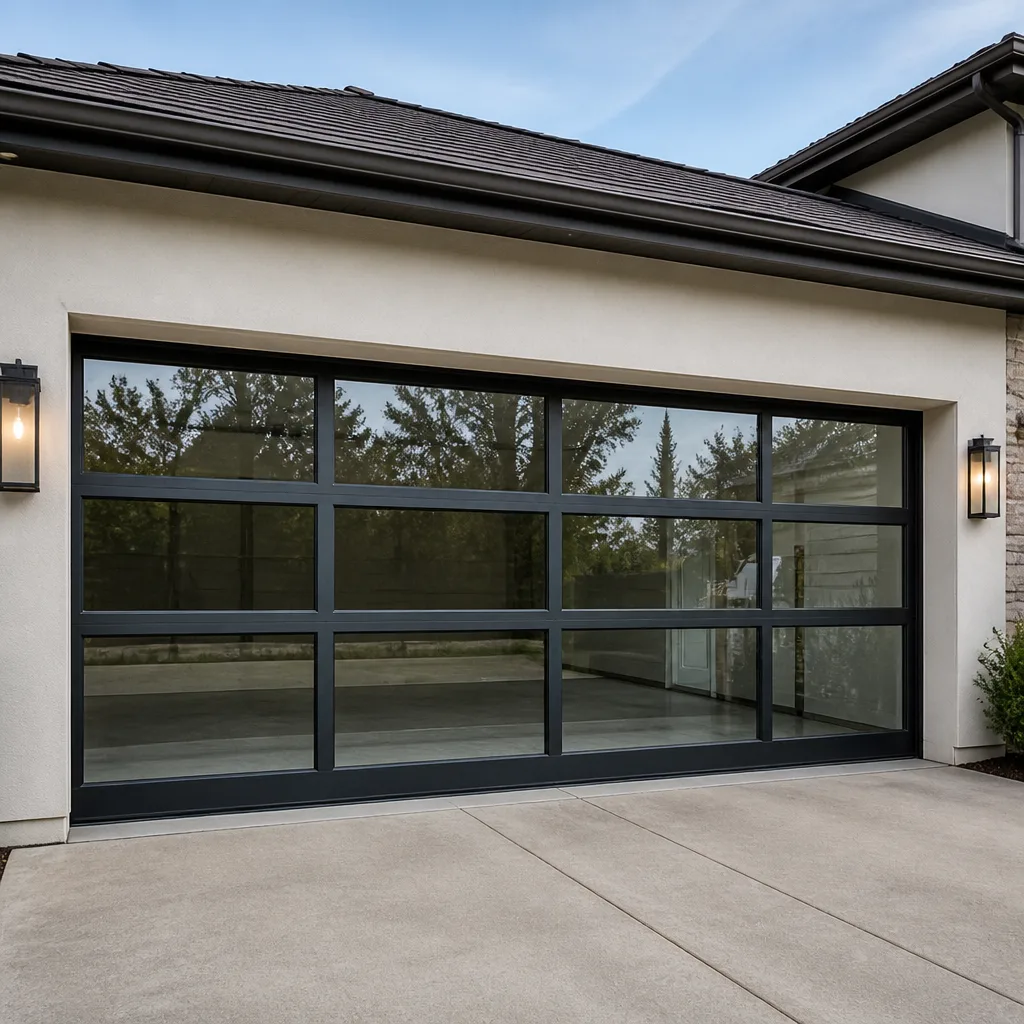 Full-view glass
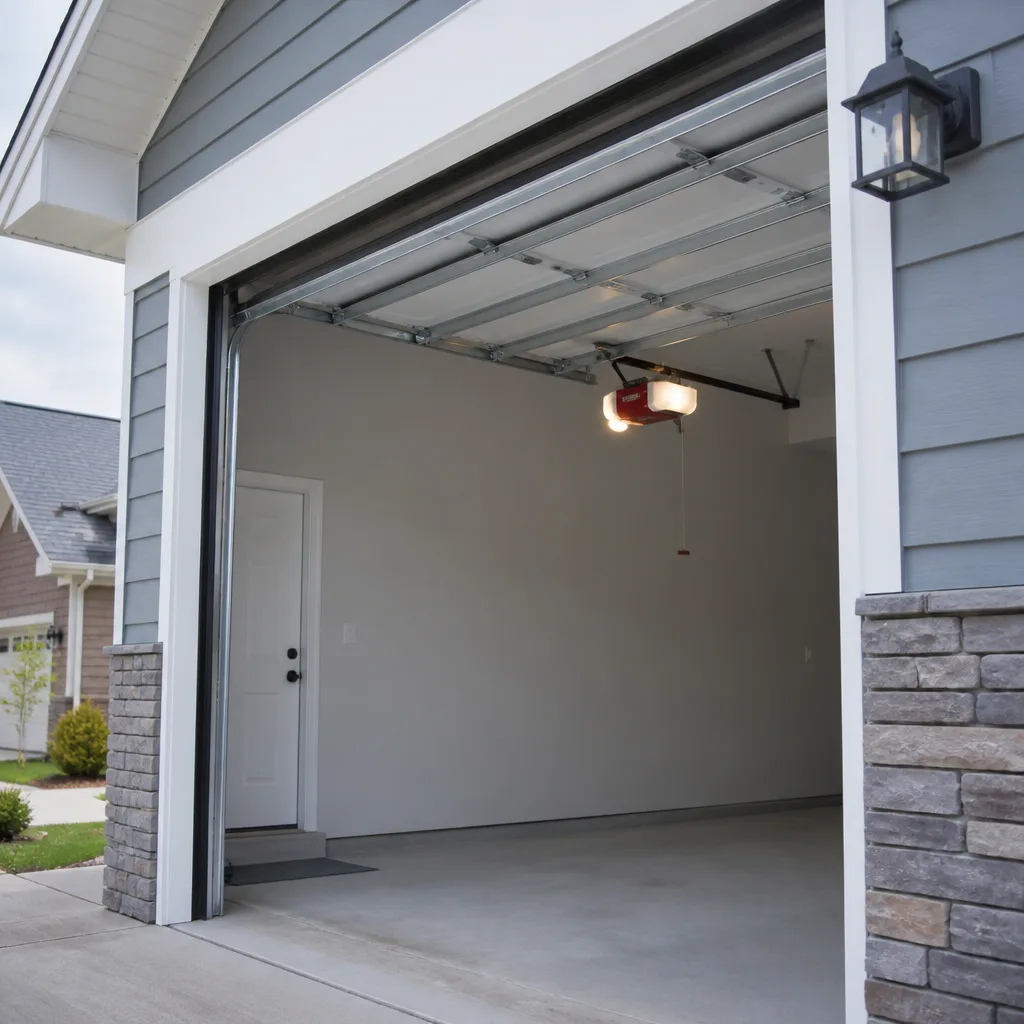 LiftMaster openers
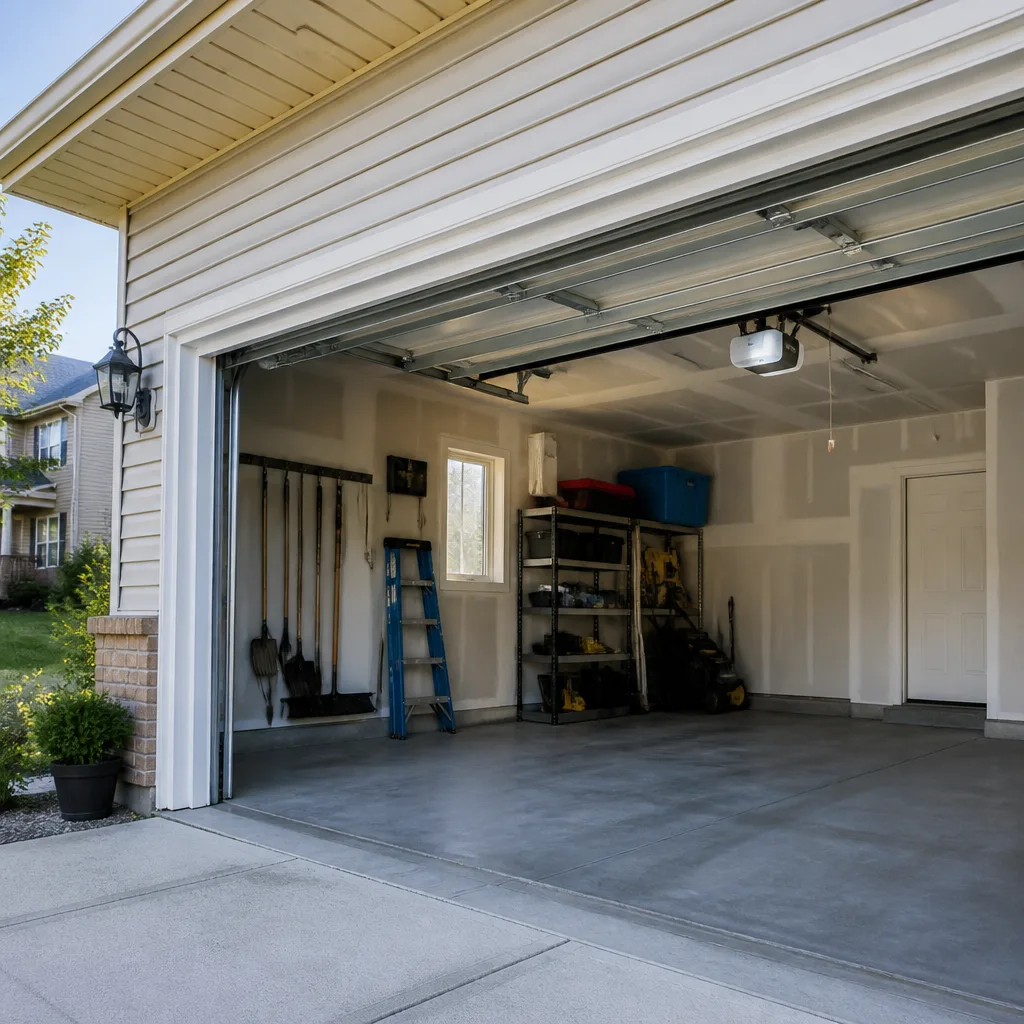 Chamberlain openers
Full 25-point door and opener safety check with every visit - springs, cables, rollers, tracks, and your LiftMaster or Chamberlain opener included
You get a price before we start. It does not change when the pro arrives.
Get your free estimateHow to Hire a Garage Door Contractor in Johns Creek: A Step-by-Step Guide
The most expensive garage door contractor is rarely the one with the highest bid. It’s the one who shows up without the right licensing, guesses at spring sizing, or installs a door that quietly violates your subdivision’s architectural standards. In Johns Creek, where HOA rules are specific and homes are built to a certain standard, a cheap bid can cost you far more than the difference in price. This guide walks you through exactly how to vet a garage door contractor in Johns Creek: what to verify, what to ask, and what a legitimate quote should contain.
Quick Answer
To hire a garage door contractor in Johns Creek, verify the contractor carries a valid Georgia business license and general liability insurance, confirm they specialize in garage doors rather than general handyman work, ask for an itemized written estimate before any work starts, and check that the contract spells out door or opener brand, spring type, and warranty terms. Alabama-based storm chasers and bait-and-switch spring pricing are the two most common traps in the Atlanta metro. A good garage door contractor will happily answer every question below without hesitation.
Styles & brands we work with
- Raised-panel steel
- Carriage house
- Modern flush
- Full-view glass
- LiftMaster openers
- Chamberlain openers
Table of Contents
- Why a Garage Door Specialist Beats a General Handyman in Johns Creek
- What Georgia Licensing and Insurance Requirements Apply?
- How to Verify a Contractor in 60 Seconds
- Why Brand-Specific Experience Matters
- Red Flags Unique to the Johns Creek Market
- The Questions That Reveal Real Expertise
- How to Evaluate a Garage Door Quote
- Why HOA Compliance Matters in Johns Creek
Why a Garage Door Specialist Beats a General Handyman in Johns Creek
A general handyman can mount a shelf, patch drywall, and re-hang a sticking closet door. What a general handyman usually can’t do is properly size a torsion spring for a specific door weight, diagnose a LiftMaster logic board fault, or install a door that meets your subdivision’s design standards. Garage doors are the largest moving object in your home, and the spring system alone can carry hundreds of pounds of stored tension. The margin for error is small.
Specialists do one thing. They spend their working hours on doors, openers, springs, and tracks. That focus shows up in faster diagnosis, fewer return trips, and correct parts sourced on the first try. At Johns Creek Garage Door Repair, garage doors are all we do. We don’t take general home repair work, which is why we can work on what you already own rather than steering you toward a replacement you don’t need.
The practical difference shows up in a few areas:
- Spring sizing: Torsion springs are matched to door weight, height, and cycle life. A handyman swapping in a spring he has on hand often leaves you with a heavier lift, faster wear, or a door that won’t stay balanced.
- Opener firmware and force settings: Modern LiftMaster and Chamberlain openers have force limits and safety reverse settings that need to be calibrated after any door change. Ignoring them creates a safety issue.
- Brand fluency: A technician who works on Craftsman and Raynor systems every week doesn’t spend the first hour of the visit figuring out which manual applies.
- HOA knowledge: Johns Creek subdivisions have architectural rules that affect panel style, window configuration, and sometimes color. A specialist who has served the area knows to ask before ordering.
Nothing in that list is a knock on handymen as a trade. It’s simply a matter of scope. When the work touches a safety-critical mechanism, you want the person who does that work every day.
What Georgia Licensing and Insurance Requirements Apply?
Georgia does not issue a statewide specific license for garage door installers the way it does for electricians or plumbers. What that means for you: the burden of verification falls on the homeowner. You need to confirm the contractor is a legitimate, insured business before any work begins, and you need to see it in writing.
What a legitimate garage door contractor in Johns Creek should be able to provide:
- Valid Georgia business registration, showing the legal business name and address.
- General liability insurance certificate, naming the business and showing current coverage dates.
- Workers’ compensation coverage if they employ helpers or technicians, which most established contractors do.
Ask for these as documents, not verbal assurances. A contractor who carries real coverage will send a certificate within minutes. One who doesn’t will explain why it’s “being renewed” or offer to bring it later. Neither answer is good enough.
Why this matters: if a worker is injured on your property and the contractor has no workers’ comp coverage, your homeowner policy may end up involved. If a door falls or a spring fails mid-install and there’s no liability coverage, you absorb the loss. Our position is straightforward: the local pro who shows up at your home should be licensed and insured as their state requires, and you should have the paperwork to prove it. When you request a quote from us, we’ll make sure the verification side is not something you have to chase.
How to Verify a Contractor in 60 Seconds
You can cut through most of the risk in a garage door contractor hire with a handful of quick checks. The goal isn’t to become a licensing expert. It’s to confirm you’re dealing with a real, insured business rather than a truck with a phone number.
- Search the business name on the Georgia Secretary of State website. You want to see an active registration with the same phone number and address the contractor gave you. Mismatches are a reason to walk away.
- Ask for the certificate of insurance and read the dates. Expired coverage is the same as no coverage. The certificate should list the business, not an individual.
- Search the company name plus “reviews” or “complaints.” Look for patterns, not isolated complaints. Every contractor eventually gets one unhappy customer. Repeated complaints about pricing, no-shows, or warranty denials are the real signal.
- Ask for a physical business address. Not a P.O. box, not a “dispatch center.” If they can’t give you a real business location, you can’t hold them accountable later.
- Confirm they work on the brand of door and opener you have. Ask directly: “Do you service LiftMaster and Chamberlain openers?” or “Do you work on Raynor doors?” If the answer is “we can try,” keep calling.
- Verify the estimate is itemized and in writing. A contractor who won’t put the parts, labor, and warranty in writing before the job starts is telling you something about how they’ll handle problems after the job ends.
This whole sequence takes minutes. What it filters out are the contractors who don’t want to be found, don’t carry insurance, or plan to make their money back on surprise add-ons. Those are the same contractors who generate most of the complaints homeowners call us about after the fact.
Why Brand-Specific Experience Matters
Walk into a Johns Creek garage and you’ll find a handful of brands far more often than any other: LiftMaster, Chamberlain, Genie, Clopay, Amarr, Wayne Dalton, Craftsman, and Raynor. Each has its own design language, its own parts ecosystem, and its own failure patterns. A technician fluent in one is not automatically fluent in the others.
This is more specific than it sounds. LiftMaster and Chamberlain share a corporate parent but run different firmware and accessory lineups across their product tiers. A Craftsman opener from one production run can behave differently from a Craftsman opener two years newer. Raynor and Clopay doors use different torsion tube configurations and panel attachment methods. A technician who’s spent years on one brand will work faster on that brand and slower on others, and that gap shows up as return trips.
When you’re hiring, ask this directly: “Which brands do you work on most often, and do you carry parts for my brand in your van, or do you have to order?” The answer tells you a lot. A contractor that works on most major brands doesn’t need to tell you your existing system is “too old” or “unsupported” to get your business. We take the opposite approach. We work on what you already own, so we’re diagnosing the actual system in your garage rather than selling you a new one.
If you already know what you have, that’s a head start. If you don’t, the brand is printed on the door’s bottom bracket (for garage doors) or on the opener’s motor housing. Have that ready when you call, and you’ll get a more accurate estimate from anyone you speak with.
Red Flags Unique to the Johns Creek Market
Johns Creek is a desirable, well-kept suburban market, which makes it a regular target for contractors who show up after a storm, knock on doors, and disappear when the work is done. The Atlanta metro has a particular pattern of this. Knowing what it looks like helps you steer around it.
Out-of-area storm chasers. After a heavy storm rolls through Fulton County, out-of-town companies sometimes run large Google Ads and storm door-knock campaigns. Their trucks carry out-of-state plates, their phone number rings to a call center, and their quote is verbal. If you ask for a certificate of insurance and the answer comes back slowly, or if the “office” address turns out to be a virtual mailbox, treat that as a stop sign. A local garage door contractor in Johns Creek should be able to prove where they’re based.
Bait-and-switch spring pricing. A common tactic is quoting an unusually low price for “spring replacement” over the phone, then arriving and announcing that your spring type is “the special kind” and costs more. The reason this works is that spring pricing depends on specifics the caller can’t see: door weight, spring wire gauge, cycle life, and whether the springs are torsion or extension. A legitimate contractor will quote a range over the phone and make it exact after inspecting the door, not invent a reason to raise the price once they’re in your garage.
Vague lump-sum quotes. If the number you get is one line – “$850” with no breakdown – you can’t tell what’s included and what’s an add-on. That’s the setup for upsells once the door is off its track.
“Your door is too old, you need a new one.” Sometimes true. Often not. Garage doors can be repaired for decades if the parts are available and the spring system is sound. Be suspicious of an immediate jump to replacement, especially without any measurement or inspection.
Those four red flags catch most of the problem contractors. There are smaller ones, but these are the pattern to look for.
The Questions That Reveal Real Expertise
You can usually tell within three or four questions whether you’re talking to a specialist or a parts-swapper. The right questions probe how they think about the door as a mechanical system, not just as a list of parts to replace.
Start with these:
- “What type of spring does my door use – torsion or extension?” A specialist will ask for your door height and weight (or a photo of the door with the springs visible) before answering. If the person on the phone guesses without asking, they’re guessing about sizing too.
- “How do you size a torsion spring for a door?” The correct answer involves measuring door weight, height, and balance, then matching to spring wire gauge and inside diameter. You don’t need to memorize spring physics. You just need to hear a process, not a shrug.
- “Have you worked on my door and opener brand before?” Ask specifically. A technician fluent in LiftMaster openers is likely fast on Genie and Chamberlain too, because the underlying logic boards and force settings share design patterns. That’s not the same as knowing every brand cold.
- “What happens if the door isn’t balanced after the repair?” Correct answer: they re-measure and adjust. Wrong answer: “It’ll be fine.”
- “Is the estimate itemized?” Parts, labor, and warranty should appear as separate lines. If they don’t, ask why.
- “What’s the warranty on the parts and the labor?” Separate terms are normal. Parts usually carry a manufacturer warranty, labor usually carries a contractor warranty. Get both in writing.
If you want a pressure test that isn’t obvious: ask what happens when a torsion spring breaks on a weekend. A specialist will know whether the door is safe to leave closed, whether it can be manually raised, and what the realistic timeline is. If they don’t offer an emergency option, that tells you something too. We offer garage door repair as one of our core services, and emergency calls as a standard offering – not as a premium upsell.
How to Evaluate a Garage Door Quote
A legitimate garage door quote is a document, not a number. It’s itemized, it’s signed or in an email you can save, and it names the specific parts and brands being installed or replaced. If you haven’t seen one of those before, here’s what should appear line by line.
A proper quote includes:
- Problem statement, in plain language: “Broken torsion spring, right side” or “Opener motor failing to lift, chain drive noise.”
- Specific parts, by brand and model where possible: “LiftMaster 8500W opener,” “Clopay Classic Steel door, 8×7, long panel.”
- Labor, as a separate line. You should see what’s being done, not just what’s being installed.
- Disposal fee if applicable, especially on a full door or opener replacement.
- Warranty terms, both for the parts and for the labor. Written, not verbal.
- Any exclusions, clearly called out: “does not include repainting,” “pricing assumes door tracks are straight.”
A vague lump-sum quote hides all of that. It also makes it easy for the contractor to add line items after the work starts, because there’s no written scope to compare against.
Compare the specific line items across quotes, not just the final number. A handyman quote for $400 on spring replacement might not include the right spring size, a matching pair if you need one, and re-balancing. A true specialist quote for more might include all of it plus a labor warranty. That’s not apples to apples unless you’re reading the lines.
On price ranges: spring pricing is traditionally quoted per spring, and a matched pair is usually replaced together, so a pair runs roughly twice a single-spring figure. If you see one quote for a single spring and a second quote for a pair, they aren’t competing bids. Ask each contractor whether they’re quoting one or both.
Why HOA Compliance Matters in Johns Creek
Johns Creek’s residential subdivisions run on architectural standards, and garage doors are one of the most visible things those standards cover. Changing the panel style, adding windows, or swapping to a door with a different color can trigger a violation, even if the new door is functionally correct. Some associations require pre-approval forms with the door’s exact specification before installation begins.
That matters at the point of hire, not at the point of install. When you’re evaluating a contractor, ask: “Have you installed doors in Johns Creek subdivisions before, and do you know the approval process?” A specialist will ask you which HOA you’re under, whether the door is a like-for-like replacement of the existing one, and whether you’ve already submitted specs to the architectural review committee. A generalist handyman will not.
Full door replacement also generally requires a permit from the city’s building department – the details depend on your specific project, so it’s worth a call to the city to confirm. A garage door contractor familiar with Johns Creek will know to raise that question before ordering the door, not after the old one is hauled away.
If you’re planning a replacement rather than a repair, the checklist matters more. That’s where the HOA, the permit, and the door spec all meet. See garage door installation for the process we follow, and bring your HOA requirements to the first call.
Common Mistakes to Avoid
- Hiring on the phone without verifying insurance. A verbal reassurance is not a certificate of insurance. Ask for the document, and read the dates on it before you agree to anything.
- Accepting a single lump-sum quote. If the estimate is one number with no breakdown, you have no idea what’s included. You’ll find out later, usually at the worst possible moment.
- Assuming any contractor can handle a torsion spring job. Many general repair services decline torsion spring work entirely, or outsource it. Ask directly whether they do spring work themselves, or sub it out.
- Ignoring HOA approval before ordering a new door. In Johns Creek subdivisions, the door has to match what the architectural review committee approved. Getting the panel style wrong is expensive to unwind.
- Chasing the lowest bid from an out-of-area storm chaser. A company that shows up after a storm often doesn’t come back when the same issue returns. Confirm the company is local and accountable.
- Skipping the warranty conversation. A parts warranty without a labor warranty can leave you paying for the same visit twice. Ask what happens if the repair fails in a month.
- Waiting on a broken spring until the door fails completely. Springs break. Doors still get lifted by homeowners who don’t realize what’s wrong. If a spring is visibly stretched or the door feels suddenly heavy, that’s a safety issue, not an inconvenience.
See the difference
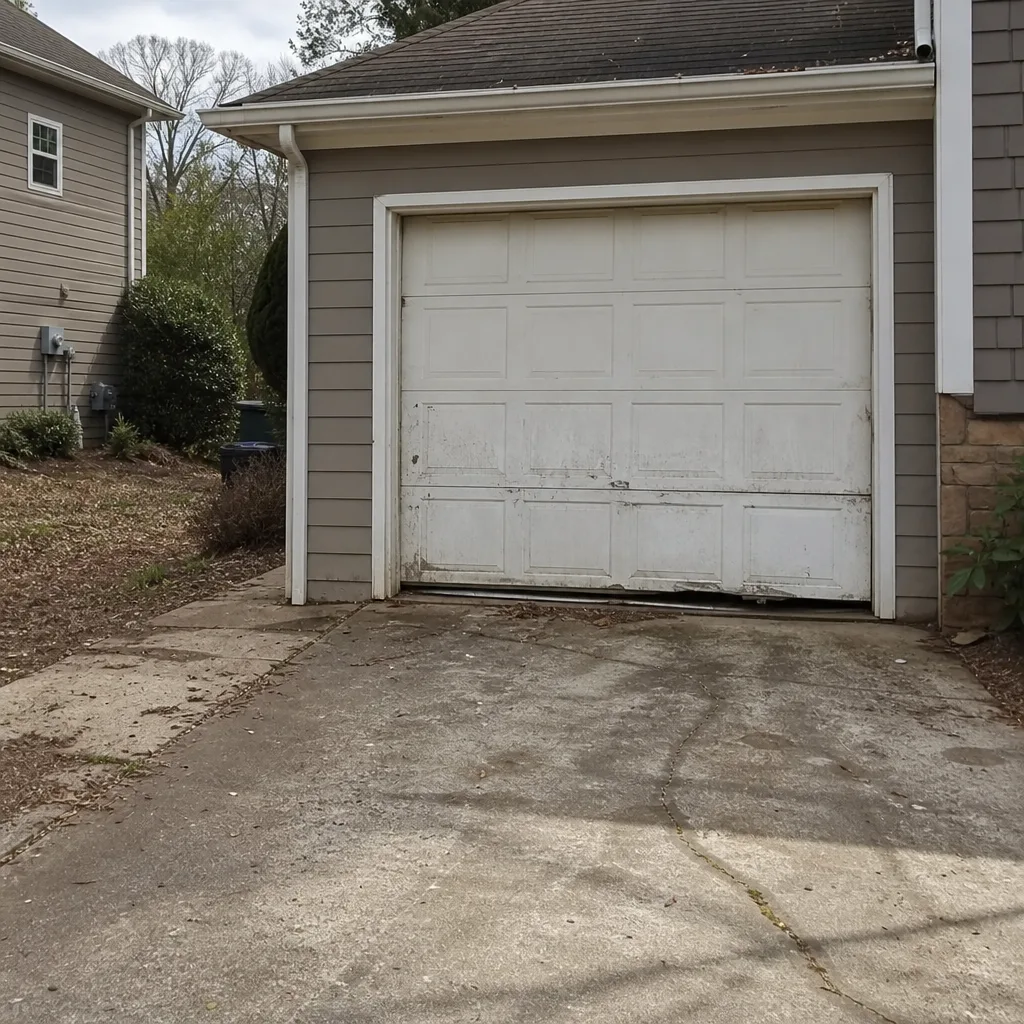 Before
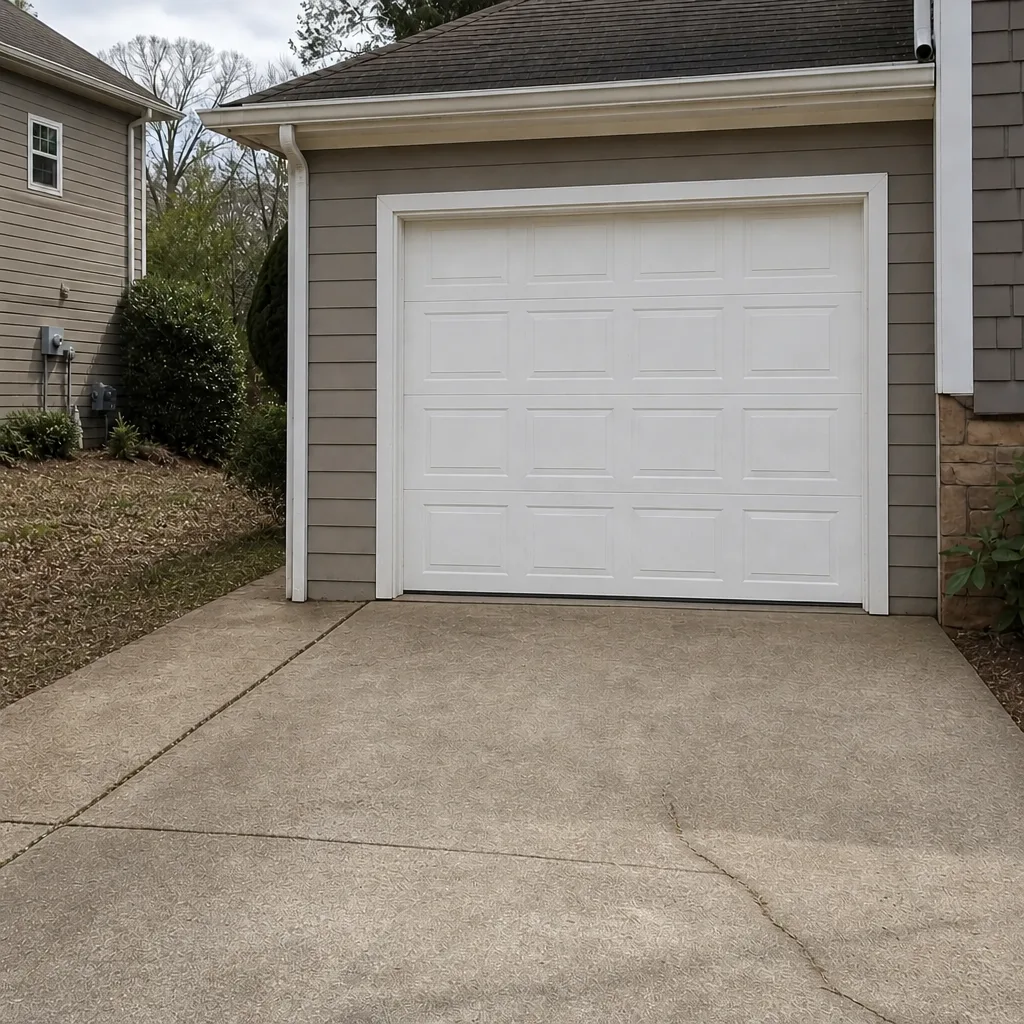 After
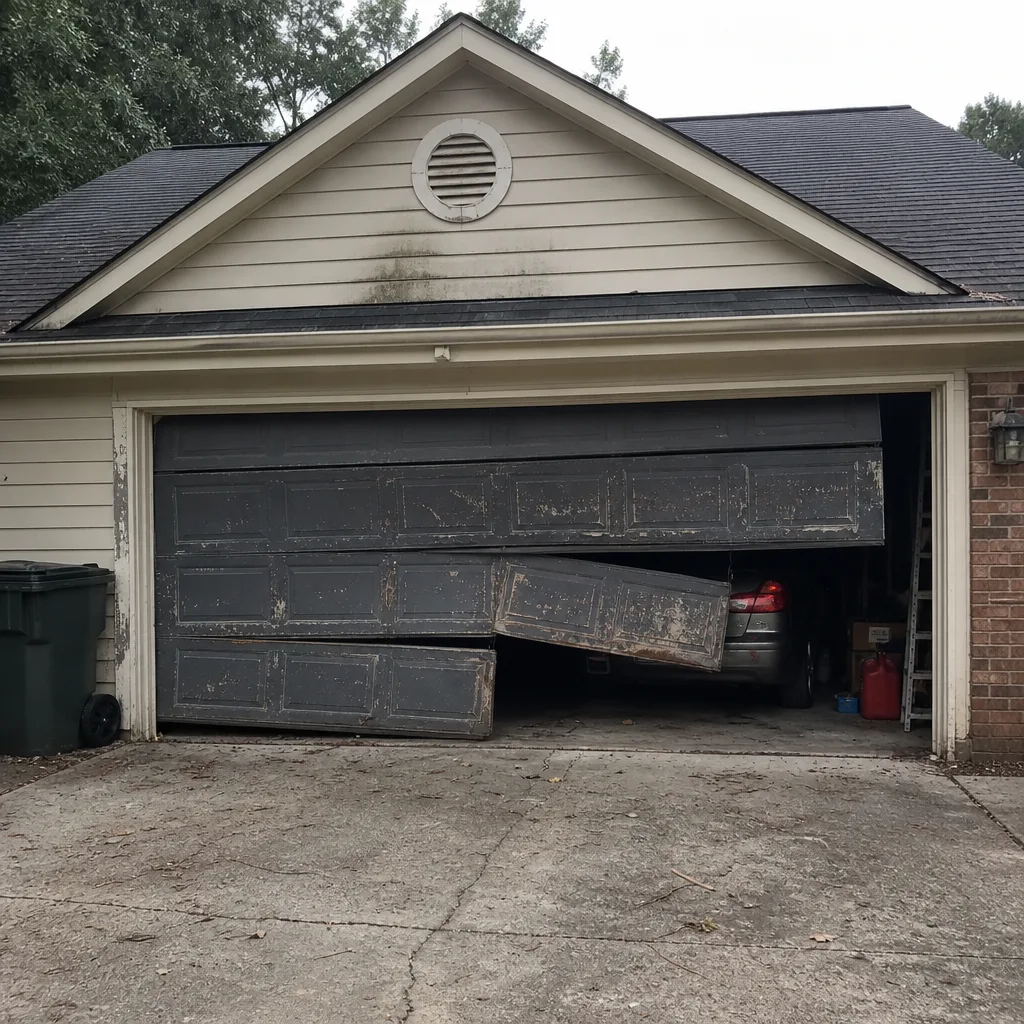 Before
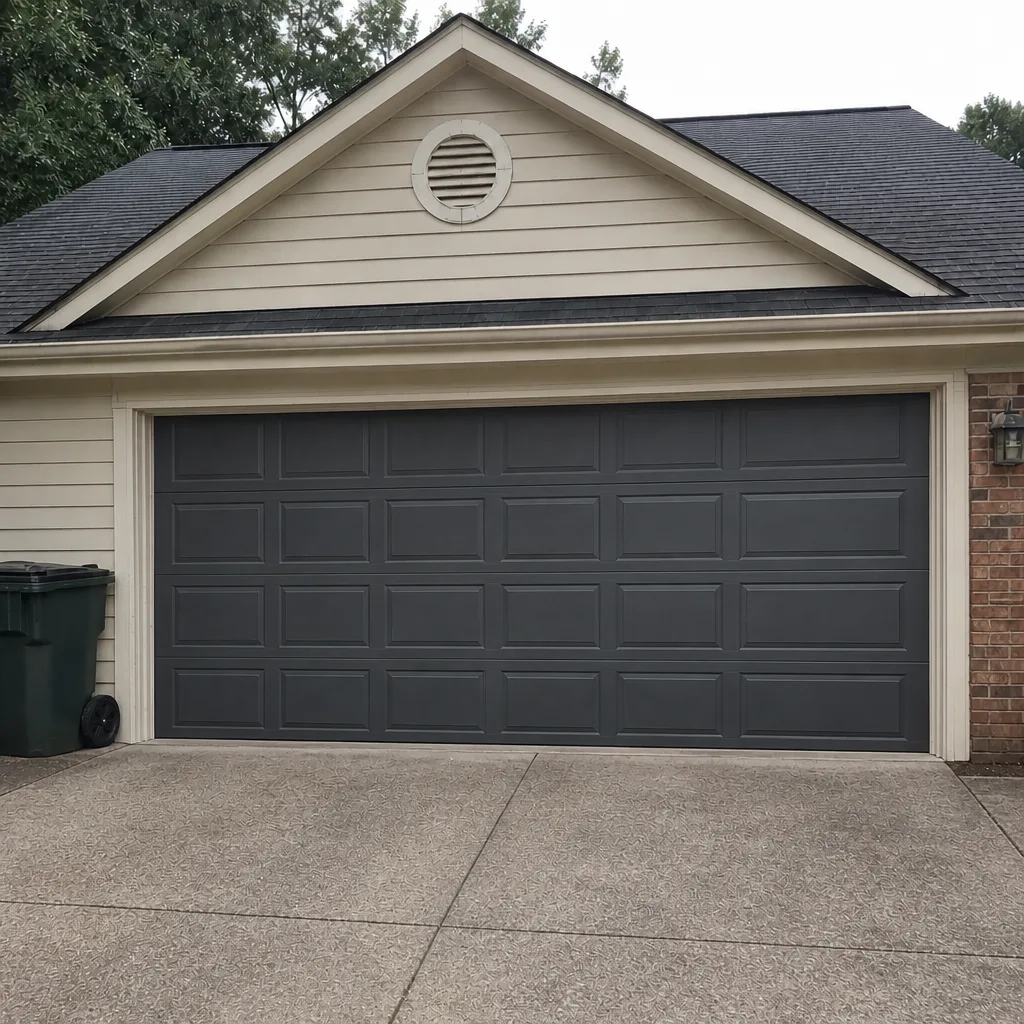 After
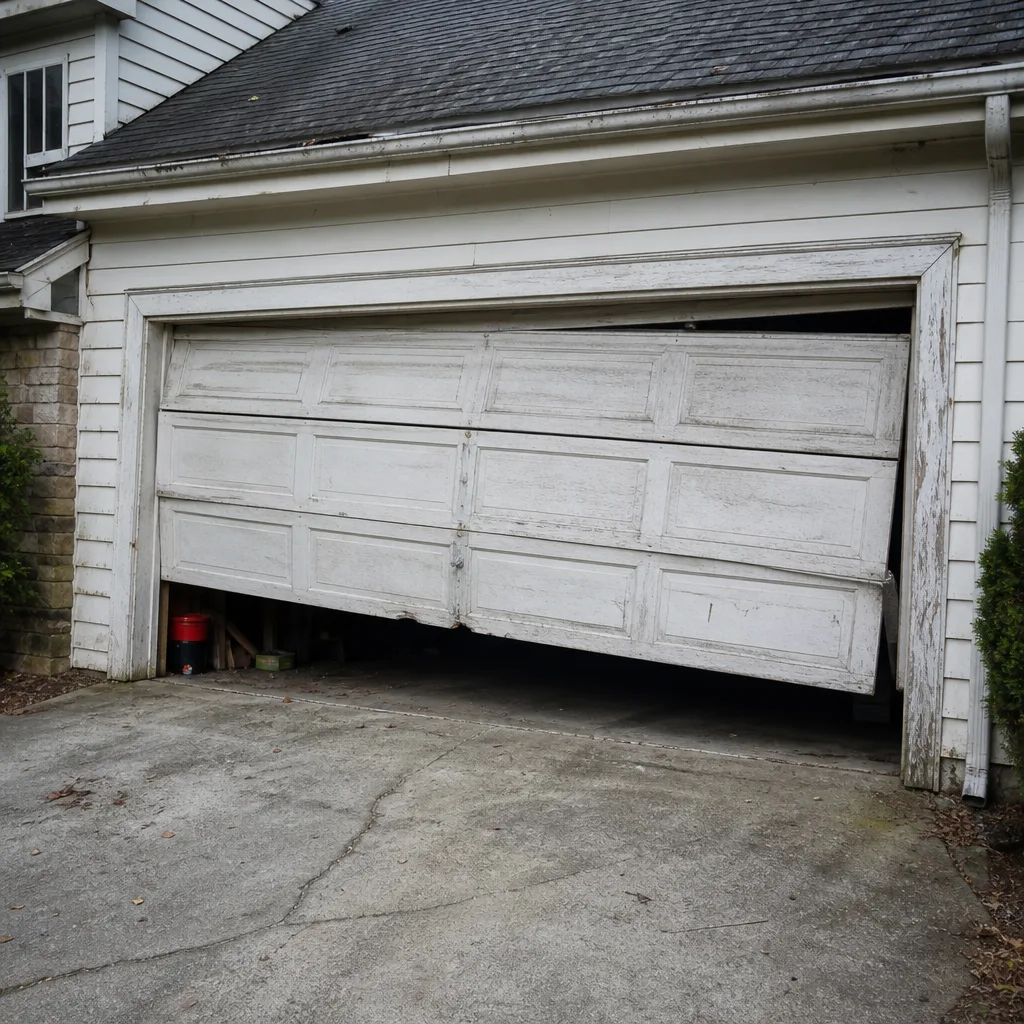 Before
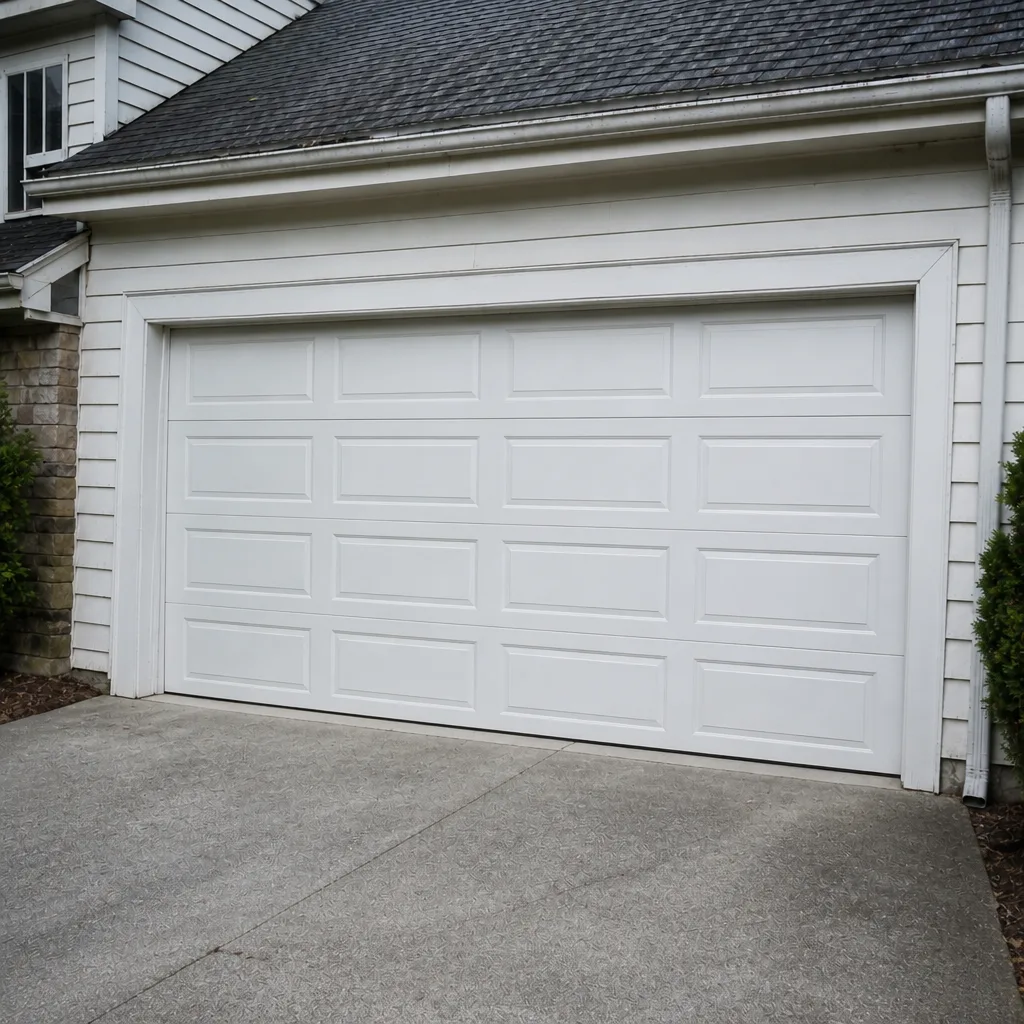 After
When to Call a Professional
Some garage door issues are cosmetic, and some are dangerous. A broken torsion spring or a snapped cable is on the dangerous side – high-tension hardware can cause serious injury if you try to handle it yourself. If the door comes down hard, stops lifting, or you’ve heard a loud snap from the ceiling mount, that’s a professional call, not a weekend project. Same for openers that reverse unpredictably, doors that come off their track, and any work on the safety reverse system.
On the other hand, routine opener maintenance, replacing a remote battery, or a door that occasionally sticks in one spot is often quick and non-urgent. If you can’t tell which category the problem falls into, call. Johns Creek Garage Door Repair offers free estimates in Johns Creek – call (855) 674-0828 and we’ll tell you what you’re dealing with, whether it’s an garage door opener repair that can be scheduled or an emergency call that needs a response today.
Frequently Asked Questions
Spring pricing depends on the type, wire gauge, and cycle life of the spring, and on whether you have one spring or a matched pair. A matched pair is usually replaced together, and that typically runs about twice a single-spring price. You should expect a written itemized estimate before any work starts. Call (855) 674-0828 for a specific quote – estimates are free.
Often, yes. Spring repair is one of our core services, not something we sub out, so we’re typically able to respond and repair within a short window rather than routing you through a parts-ordering cycle. Call with your door height and a photo of the springs if you have one, and we can give you a faster estimate.
No. The written estimate is the price. Over-the-phone ranges are estimates because we can’t see the door, but once a technician has inspected the door and quoted the work, that quote stands. If we find something different mid-job, we’ll stop and ask before doing anything outside the written scope – you won’t get an invoice bigger than the quote without agreeing to it first.
Yes. The local pros we connect you with are licensed and insured as their state requires. You should always ask any contractor you hire in Johns Creek for a certificate of insurance, and we expect that same standard from the professionals we send. Our technicians have up to 8 years of experience with systems from LiftMaster, Chamberlain, Genie, Clopay, Amarr, Wayne Dalton, Craftsman, and Raynor.
In many cases, yes. We handle repair, opener repair, spring repair, installation, and emergency service under one roof, so a door replacement and an opener repair can be scheduled together. That eliminates the back-and-forth of coordinating two contractors. During the estimate for a full replacement, we’ll quote both and let you decide whether to handle them together or separately.
Yes. We’re brand-agnostic and work on what you already own. A door or opener that’s over a decade old is often fully repairable if the parts are available. If we can’t source a part for a specific system, we’ll tell you that directly and offer a replacement option – but we don’t default to “you need a new one” just because the door has some age on it.
The Bottom Line
Hiring a garage door contractor in Johns Creek comes down to verifying what you can see and asking the right questions about what you can’t. Check the Georgia business registration and insurance certificate. Confirm the contractor specializes in garage doors rather than treating it as one of twenty services. Ask for an itemized, written estimate before you agree to anything. Understand that spring pricing is per-spring and a pair runs about twice a single-spring figure. And take the HOA question seriously if you’re replacing rather than repairing. Do those things, and you’ll get a door that works, a warranty that means something, and a contractor who’s still around when the same problem comes up five years from now.
If you want a second opinion on a quote you’ve already been given, or you’re at the start of the process, the team at Johns Creek Garage Door Repair offers free estimates and honest answers. Call (855) 674-0828 to schedule a free estimate and get the work done right the first time.
Written by the team at Johns Creek Garage Door Repair.