Top Signs You Need Garage Door Service – Don’t Ignore These
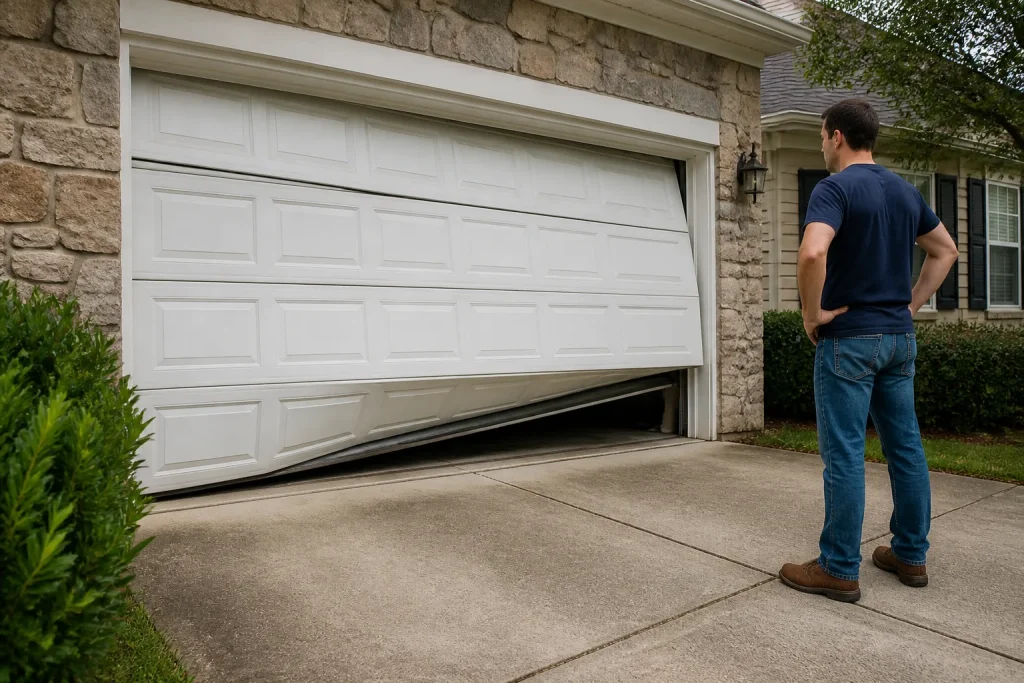
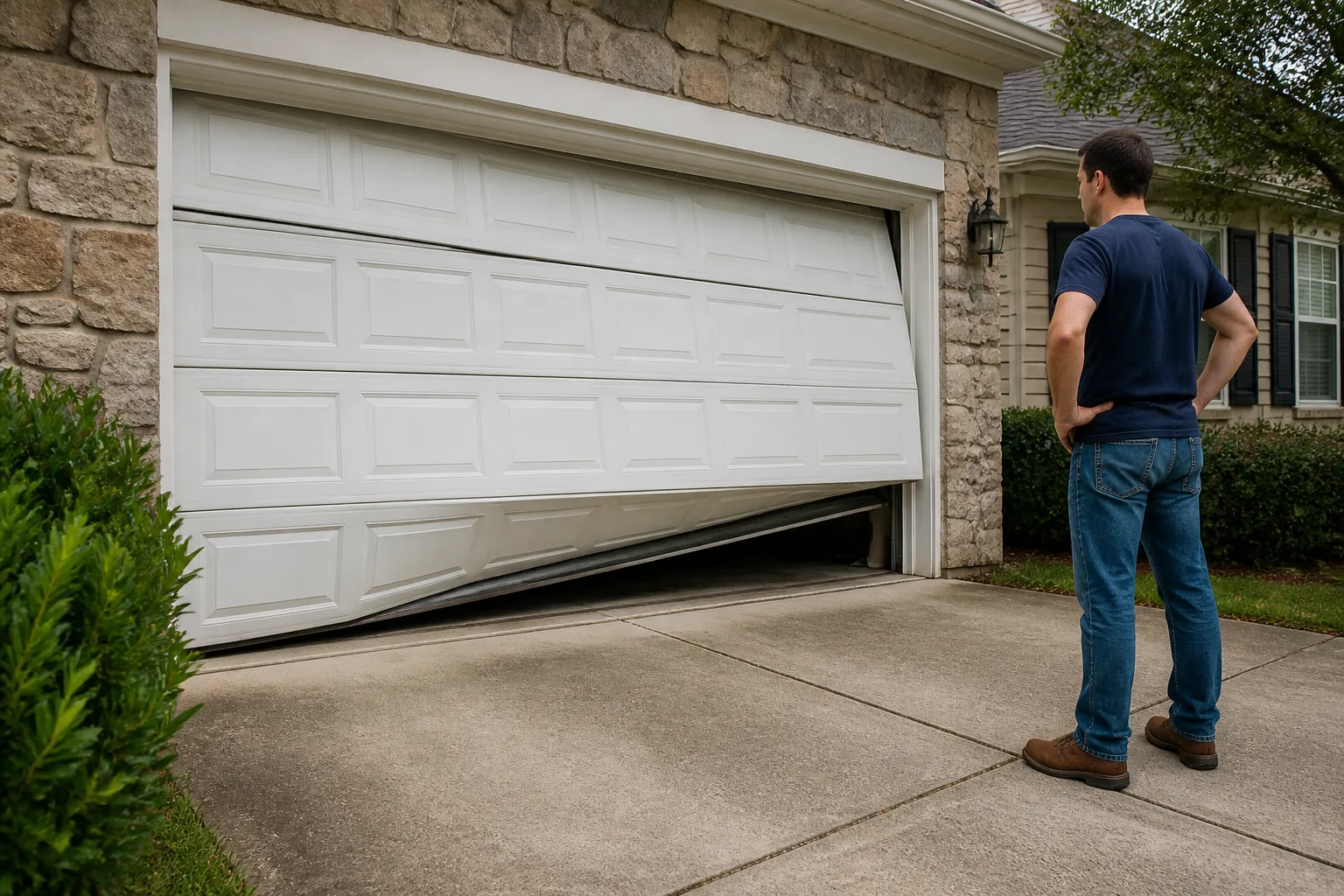
The clearest signs you need garage door service are a door that moves slower than it used to, grinding or squeaking sounds, a visible gap in a spring, frayed cables, or a door that hesitates at the top or bottom of its travel. None of these fix themselves, and most get more expensive the longer you wait. A garage door that takes three seconds longer to open than it did six months ago isn’t aging. It’s telling you the springs are losing tension. By the time it stops completely, you’re looking at an emergency call instead of a scheduled tune-up. If you’d rather not diagnose it yourself, call (855) 674-0828 and we’ll take a look.
What sounds should make you pick up the phone?
Every garage door has a vocabulary, and the sound it makes tells you which part is complaining. A healthy door is boring: a low motor hum and a soft roll. Anything sharper than that is worth a look.
- Grinding usually points to worn or dry rollers, a bent track, or a torsion shaft that needs lubrication. Left alone, grinding wears metal against metal and shortens the life of the parts around it.
- Squeaking is the friendliest sound on this list. It’s typically rollers, hinges, or the opener’s rail asking for lubricant. Cheap to fix, easy to ignore too long.
- Rattling or banging can mean loose hardware, a failing opener chain, or a door that’s come out of balance. If the banging comes from the spring area, stop using the door and call a technician.
- A single loud pop followed by a door that won’t lift is a broken spring. That’s an emergency, not a tune-up.
We work on what you already own, so a strange noise from a Genie opener or an older Wayne Dalton door is something we diagnose rather than dismiss. Multi-brand familiarity means faster diagnosis and fewer return trips, because we’re not guessing at how your specific system is built. Homeowners in Johns Creek hear these sounds every day and chalk them up to “just how it is.” It isn’t.
Why does my door hesitate at the top or bottom?
A door that pauses before it closes or stalls near the top isn’t being dramatic. It’s usually a safety sensor, a balance problem, or a spring that’s lost tension. Hesitation is one of the most common signs you need garage door repair, and it’s one of the easiest to catch early.
Here’s what’s likely happening:
- Safety sensors. The two small lenses near the floor should have a steady light. If one is blinking or dark, the door will reverse or refuse to close. Sometimes it’s as simple as a cobweb or a bumped bracket. Sometimes the sensor itself has failed.
- Spring balance. Lift the door halfway by hand (carefully, and only if it moves freely). A balanced door stays put. One that drifts down or slams up has a spring problem.
- Track alignment. A door that hesitates at the same spot every time may be catching on a bent or dirty track. That’s a visual check you can do in seconds.
If the hesitation traces back to the springs, that’s a job for a trained professional. Torsion and extension springs are under high tension and can cause serious injury if handled without the right tools and technique. We treat spring work as a precision specialty, not an afterthought, and it’s a service many general repair companies decline for exactly that reason.
What can I check in 60 seconds?
You don’t need tools or a ladder for a quick inspection. Walk around the door, look up, and look down. These four checks catch most problems before they become emergencies.
- Cables. Look at the steel cables running along each side. Frayed strands, kinks, or slack mean the cable is failing. Don’t touch a cable under tension; note it and call.
- Springs. A torsion spring sits above the door; extension springs run along the sides. Look for a visible gap or separation in the coil. A gap means the spring has broken.
- Rollers. Rollers should be round and quiet. Flat spots, chips, or wobble mean replacement is due.
- Weatherstripping. The rubber seal along the bottom should be pliable and intact. Cracked or missing seals let in water, pests, and hot Georgia air.
That minute of looking is the difference between a small repair and a big one. Catching a worn roller before it chews up the track is a modest fix. Replacing the track after the damage is done runs several times higher. The same math applies to a frayed cable: one cable now, or a jammed and possibly dropped door later. When you’re ready for a proper look, our garage door repair team can walk the whole system with you.
How do Johns Creek’s seasons affect my door?
Georgia’s temperature swings put real stress on a garage door. Metal expands in the heat and contracts in the cold, and springs, seals, and lubricants all respond to those shifts. Johns Creek summers push well into the 90s, and winter mornings can dip near freezing. That back-and-forth works the moving parts harder than a mild climate would.
What to check in January: listen for a stiffer, slower door on cold mornings. Cold thickens lubricant and tightens metal, which can make a marginal spring feel worse. Check that the weatherstripping hasn’t cracked in the dry air.
What to check in July: heat softens seals and can warp a lightweight door or track. Feel the bottom seal for mushiness, watch for a door that binds in the afternoon, and listen for new squeaks as lubricant thins out. Wooden and older steel doors feel summer most. If your door is a Clopay or Amarr model that’s been through several Georgia summers, a seasonal check goes a long way.
Our technicians have up to 8 years of experience with these swings, and we know which parts fail first when the thermometer moves.
When should I call a pro instead of waiting?
Call a professional the moment the problem involves springs, cables, or anything electric. Those are the parts where a DIY approach can turn a repair into an injury. Grinding that won’t quit, a door that reverses for no reason, or a remote that only works up close are all worth a call. If the door won’t move at all, emergency garage door service is part of what we do, because a stuck door means a locked-in car or an open house.
Here’s the rule we give homeowners: if you can see it, hear it, or feel it, it’s worth a look. If you can’t safely touch it, don’t. The one thing we’d add is a little humor: a garage door is the only part of your house that gets used twice a day and complained about exactly never, right up until it quits. Give it the same attention you give the HVAC filter and it’ll return the favor.
Need opener help too? That falls under garage door opener repair, and a LiftMaster or Chamberlain unit that strains or reverses is usually a sensor or gear issue we can sort out.
Related services in Johns Creek
If you’re weighing a repair against a replacement, our garage door installation page covers how that decision usually goes. And you can always start at Johns Creek Garage Door Repair to see the full range of what we handle.
The Bottom Line
Most garage door failures announce themselves weeks before they stop the door for good. The sounds, the hesitation, the visible wear, and the seasonal strain in Johns Creek are all early warnings. Catch them and you’re looking at a small scheduled repair; ignore them and you’re looking at an emergency call and a bigger bill.
Keep these takeaways in mind:
- Grinding, squeaking, rattling, and popping each point to a different part. Learn the difference.
- Hesitation at the top or bottom is a sensor or spring problem, not a quirk.
- A 60-second visual check for cables, springs, rollers, and seals prevents most surprises.
- Check specific parts in January and July, when temperature swings do the most damage.
- Never handle springs or cables yourself. That’s trained-professional territory.
If you’re in Johns Creek and need help, Johns Creek Garage Door Repair offers free estimates – call (855) 674-0828. We handle repair, spring work, opener repair, installation, and emergency calls, and we work on the system you already have.
Frequently Asked Questions
The earliest signs are a door that opens more slowly than it used to, new grinding or squeaking sounds, and a door that hesitates at the top or bottom of its travel. A visible gap in a spring or a frayed cable are later, more urgent signs. Call (855) 674-0828 for a free estimate if you spot any of them.
No. Torsion and extension springs are under high tension and can cause serious injury if handled without the right tools and technique. This is a job for a trained technician, and it’s why spring repair is a specialty rather than a general handyman task. Call us and we’ll take care of it safely.
Cost depends on the part and the job, so the honest answer is that it varies. Catching a worn roller early is a small fix; replacing a damaged track after the fact runs several times more. We quote and agree on the price before any work starts, so you know the number up front. Call (855) 674-0828 for a free estimate.
Yes. Metal expands in summer heat and contracts in winter cold, which stresses springs, seals, and lubricants. In Johns Creek, check for a stiff door and cracked seals in January, and warped seals or binding in July. A seasonal look keeps small weather-related wear from growing into a repair.
Written by the team at Johns Creek Garage Door Repair.
Need Garage Door Help?
Call Johns Creek Garage Door Repair - the local pro we connect you with is licensed and insured, here with fast after-hours help in Johns Creek.
(855) 674-0828